
Carrier AC Installation in Coral Springs: A Homeowner’s Guide
Carrier’s Infinity series has one of the strongest reputations in residential HVAC, and it earns most of that reputation honestly. It also runs a communicating control system that plenty of general technicians have never been trained on. That gap matters more than most homeowners realize: a premium Carrier system wired to the wrong thermostat can lose the variable-speed efficiency and smart zoning you paid a premium for, and you won’t find out until the electric bills arrive. A Carrier unit installed well beats a mid-tier brand installed correctly every time. A Carrier unit installed carelessly loses to both.
Why the Installation Matters More Than the Badge in Coral Springs
In Coral Springs, your AC runs roughly ten to eleven months out of the year. That’s not a slogan, it’s the reality of South Florida living. A system that cycles constantly and never gets a real off-season break will expose installation mistakes fast. A refrigerant charge that’s slightly off, a duct run that’s undersized, a return that’s too small, a line set that’s kinked – none of these show up on a mild spring day. They show up in August, when the system is running flat out and still can’t hit the setpoint.
We work on nine major brands, Carrier included, and we’ve seen the pattern enough times to say it plainly: the quality of the install is what you actually live with. The nameplate is what you tell your neighbor about.
A proper Carrier installation in Coral Springs starts with a load calculation for your specific home – square footage, window orientation, insulation, attic ventilation, how much shade your roof gets in the afternoon. Skip that step and you get a system sized by rule of thumb, which is how you end up with a unit that’s technically a Carrier but practically a headache. If you’re comparing options, our AC installation page outlines what a thorough install actually involves.
Communicating vs. Non-Communicating Carrier Systems: The Distinction That Costs Homeowners Money
This is the part most Carrier installation guides gloss over. Carrier builds two very different families of equipment, and they don’t behave the same way.
- Communicating systems (Infinity series): The outdoor unit, indoor air handler and thermostat all talk to each other over a dedicated communication bus. The system can modulate capacity in fine increments, report faults to the thermostat, and run variable-speed airflow. It’s genuinely efficient – when the whole loop is intact.
- Non-communicating systems (Comfort and Performance series): Standard 24-volt control. The thermostat tells the equipment on or off, and the equipment does its best. Fewer moving parts, simpler to install, easier to service.
The mistake we see is an Infinity outdoor unit paired with a non-Infinity thermostat or a non-communicating air handler because the installer didn’t want to run the communication wire, or didn’t have the training. The system still cools. It just doesn’t do the thing you paid for. Variable-speed modulation, zoning control, diagnostic reporting – all of it goes dark.
Before signing anything, ask one direct question: “Will the thermostat you’re installing communicate with this equipment?” If the answer is vague, that’s your answer. A Carrier install in Coral Springs should never downgrade a communicating system to save an hour of wiring.
Warranty Registration and the 90-Day Window Most Homeowners Miss
Carrier’s standard equipment warranty is longer when the system is registered than when it isn’t. Registration typically needs to happen within a set window after installation – for many Carrier products that window is around 90 days. Miss it and you don’t lose coverage entirely, but you almost certainly lose years of it. That’s a lot of parts coverage to forfeit because nobody submitted a form.
Ask your installer three things before work begins:
- Who registers the equipment, and when?
- Will you send me the registration confirmation, not just tell me it was done?
- Does the labor warranty come from Carrier, from the installing contractor, or both – and for how long?
The registration is often the installer’s responsibility, not the homeowner’s. Confirm it in writing anyway. In our experience, the paperwork is exactly where busy installers drop the ball. It’s an unglamorous detail that has nothing to do with how cold the house gets, but it’s the difference between a $200 part and a $2,000 compressor being covered five years from now.
Greenspeed, Variable-Speed, and Coral Springs’ Long Cooling Season
Variable-speed and Greenspeed technology exist to match cooling output to actual demand instead of blasting on and off at full capacity. In a mild climate that’s a nice-to-have. In Coral Springs, where the system runs most of the year, it’s the main event – the long cooling season makes every efficiency and comfort gain show up bigger than it would up north.
Variable-speed equipment can run at low capacity for long stretches, which holds humidity down better than a single-stage unit that cycles on and off. In a place as humid as Coral Springs, that dehumidification difference is something you can feel. Rooms stay comfortable at a higher thermostat setting, and air is moved more evenly.
But all of that depends on proper sizing. An oversized variable-speed system short-cycles anyway, and you’ve paid for capability you never use. An undersized one runs at maximum forever and never quite catches up. The equipment is only as good as the load calculation behind it.
Which Carrier Lines Make Sense in South Florida’s Climate
Carrier sells equipment engineered for a range of climates, and not every line is equally at home in humid, long-season cooling. A few general rules that hold up:
- Prioritize humidity control. In Coral Springs, dehumidification matters as much as raw cooling capacity. Look for variable-speed air handlers and systems with enhanced moisture removal.
- Favor variable-speed over single-stage if the budget allows. The long cooling season is where the efficiency advantage actually pays back.
- Think about corrosion resistance. High indoor humidity and condensation are part of life here; coil and cabinet construction that handles moisture well matters over a 15-year horizon.
- Don’t pay for heating features you’ll rarely use. A heat pump has a place, but sizing and cooling performance should drive the decision, not the occasional cold snap.
We also install and service Rheem, York, Daikin and Bryant equipment, so when we recommend a Carrier line for your Coral Springs home, it’s because it fits the house and the climate – not because it’s the only brand on the menu. Nine major brands, zero brand bias.
Questions to Ask Any Installer Before They Touch a Carrier System
Manufacturer certification isn’t just a logo on a website. For Carrier systems it should signal actual factory training on communicating controls, Greenspeed systems and proper commissioning. Ask these questions before you sign:
- Are your technicians factory-trained on Carrier equipment, and specifically on communicating controls?
- Will you perform a room-by-room load calculation, or size by square footage?
- What thermostat will you install, and does it communicate with the equipment?
- Who files the warranty registration, and will I get confirmation?
- What’s included in the written estimate, and what isn’t?
- Do you handle furnace as well as AC work, so I’m not juggling two contractors?
An installer who can answer all six clearly is probably the one you want. One who gets defensive on question one is worth walking away from.
When to Call a Pro
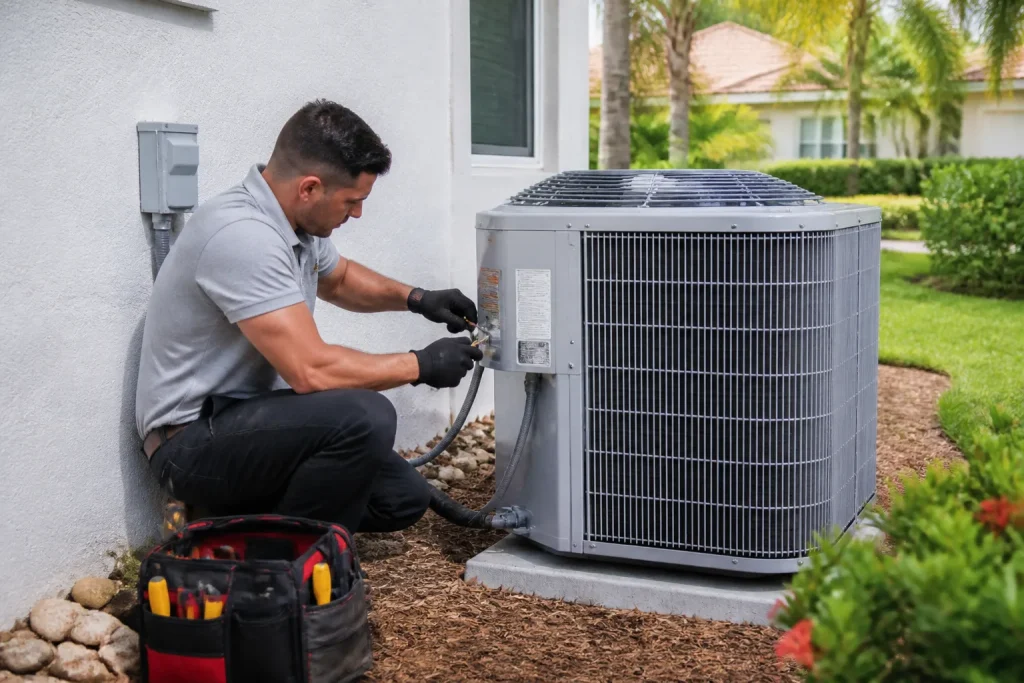
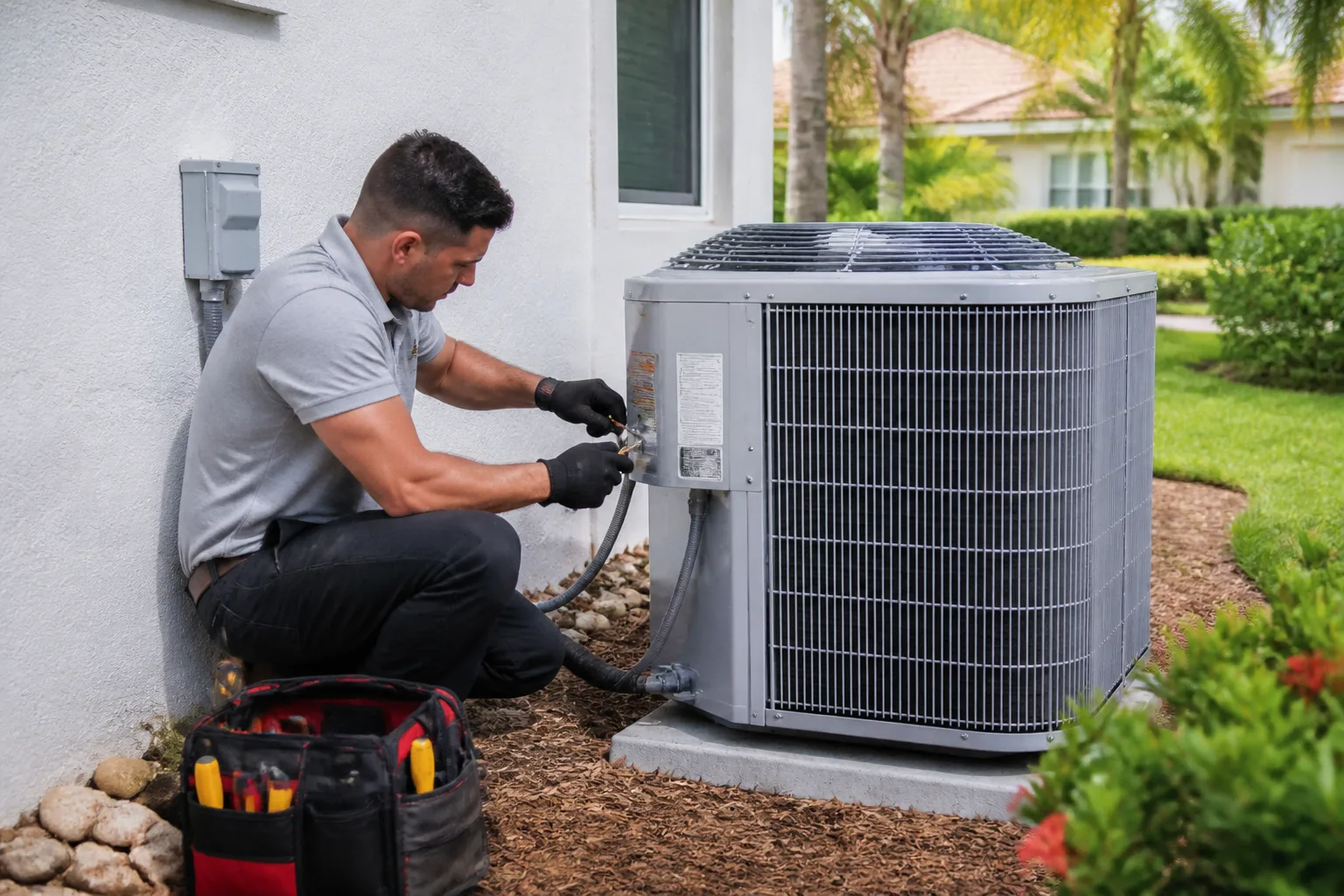
A Carrier installation isn’t a weekend project – refrigerant lines, electrical connections and system commissioning all require a licensed technician. If your current system is struggling through another Coral Springs summer, or you’re weighing a replacement, call and get a straight answer before you spend. Repair or replace, we’ll tell you which one actually makes sense for your home and budget.
Related services in Coral Springs: we also handle Coral Springs heating work, and our furnace repair team covers the other half of your system so you’re dealing with one company, not two. And if you want the bigger picture on what an install should include, the Clover AC Repair homepage is a good place to start.
The Bottom Line
Carrier builds good equipment. Whether you get a good Carrier installation in Coral Springs comes down to four things: a real load calculation, the right thermostat matched to the equipment, warranty registration filed on time, and a technician trained on the system as it’s actually built. Get those right and a Carrier system will serve you well through the long South Florida cooling season. Get them wrong and you’ll pay for a premium system that performs like a mid-tier one.
If you’re in Coral Springs and need help, Clover AC Repair offers free estimates – call (833) 501-2993. We work on Carrier and eight other major brands, so we’re not here to sell you a name you don’t need. We answer 24/7, with fast dispatch from 7am to 7pm, Sunday through Friday. Our technicians have up to 13 years of experience across heating and cooling.
Frequently Asked Questions
Yes, it matters a great deal. Infinity systems are communicating systems, and they only deliver variable-speed modulation, zoning control and diagnostic reporting when paired with a communicating Carrier thermostat. A standard thermostat will let the system cool, but it disables the features you paid a premium for. Ask your installer to confirm the thermostat communicates with the equipment before the work begins.
For many Carrier products, registration needs to happen within roughly 90 days of installation to qualify for the extended coverage. Miss the window and you may still have coverage, but it’s typically shorter. Ask your installer who files the registration and request written confirmation that it was submitted. Call (833) 501-2993 if you need an exact quote – estimates are free.
In most cases, yes. Because the cooling season here runs ten to eleven months, the efficiency and humidity-control advantages of variable-speed equipment compound over the year in a way they don’t in milder climates. That said, it’s only worth it if the system is properly sized. An oversized variable-speed unit short-cycles and erases much of the benefit. A load calculation comes before any equipment recommendation.
There’s no single answer without looking at your system, but the general rule is: if the repair is modest and the equipment is mid-life with a solid service history, repair usually makes sense. If you’re facing a major component failure on aging equipment, replacement starts to win. Because we service nine major brands, we can give you a straight cost-benefit answer rather than defaulting to the option that benefits a narrow service menu. Call (833) 501-2993 and we’ll walk through it with you – estimates are free.
Written by the team at Clover AC Repair.
Need HVAC Help?
Call Clover AC Repair - licensed & insured, here with fast help in Coral Springs.
(833) 501-2993