
Last updated November 15, 2026
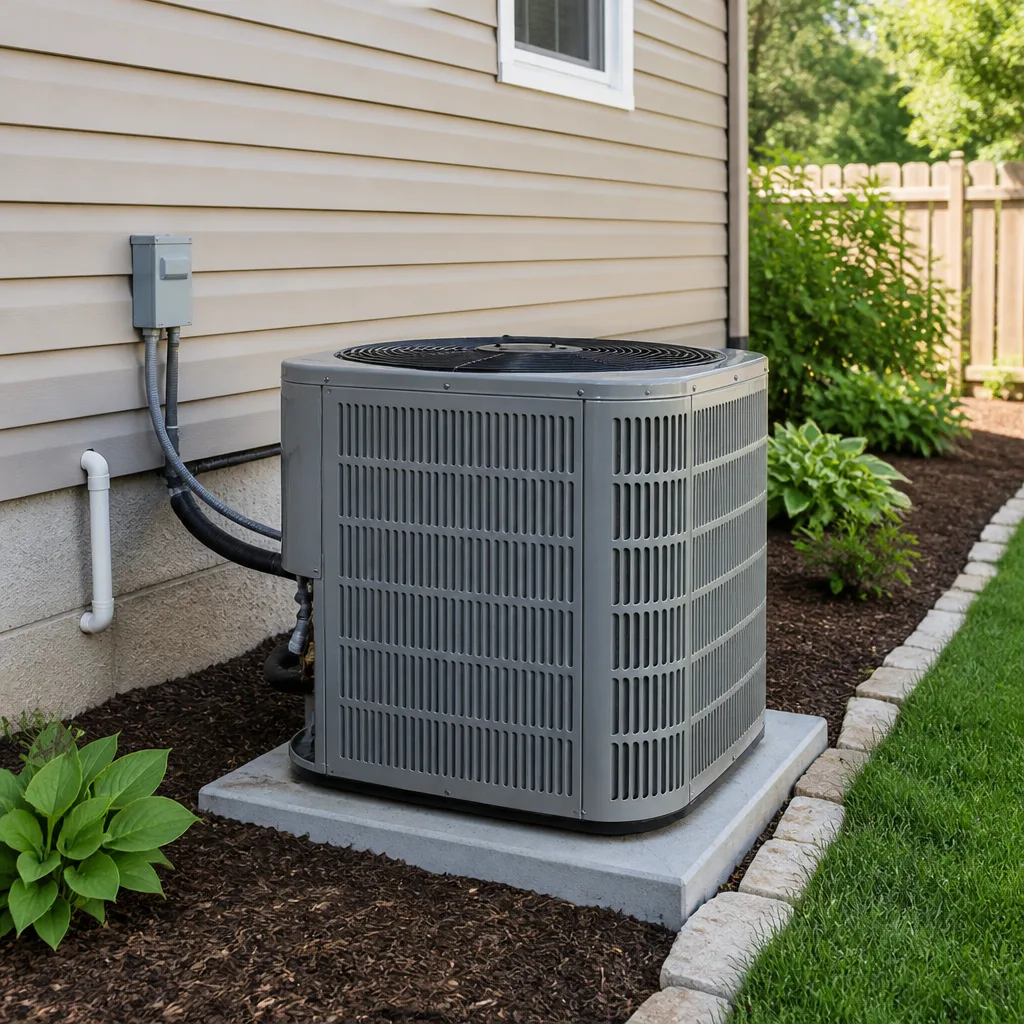 AC repair
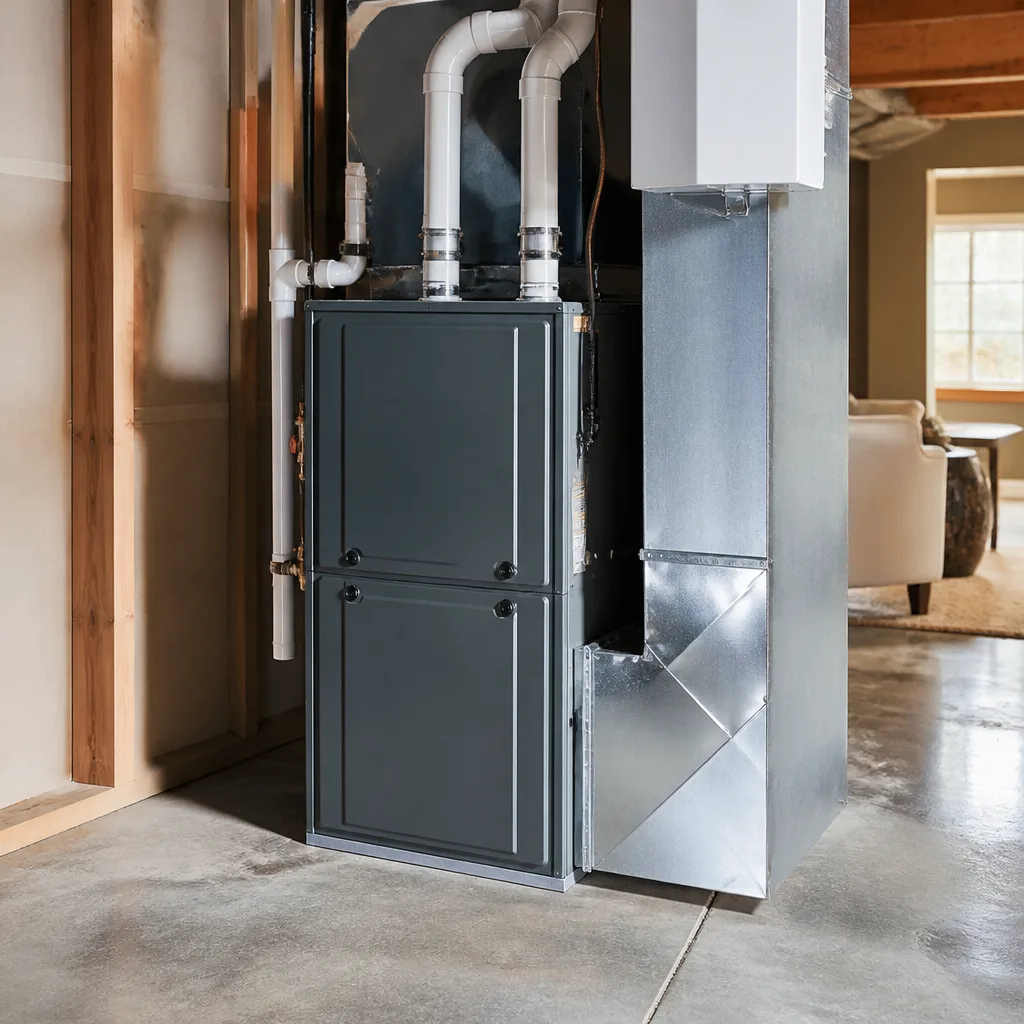 Furnace & heating
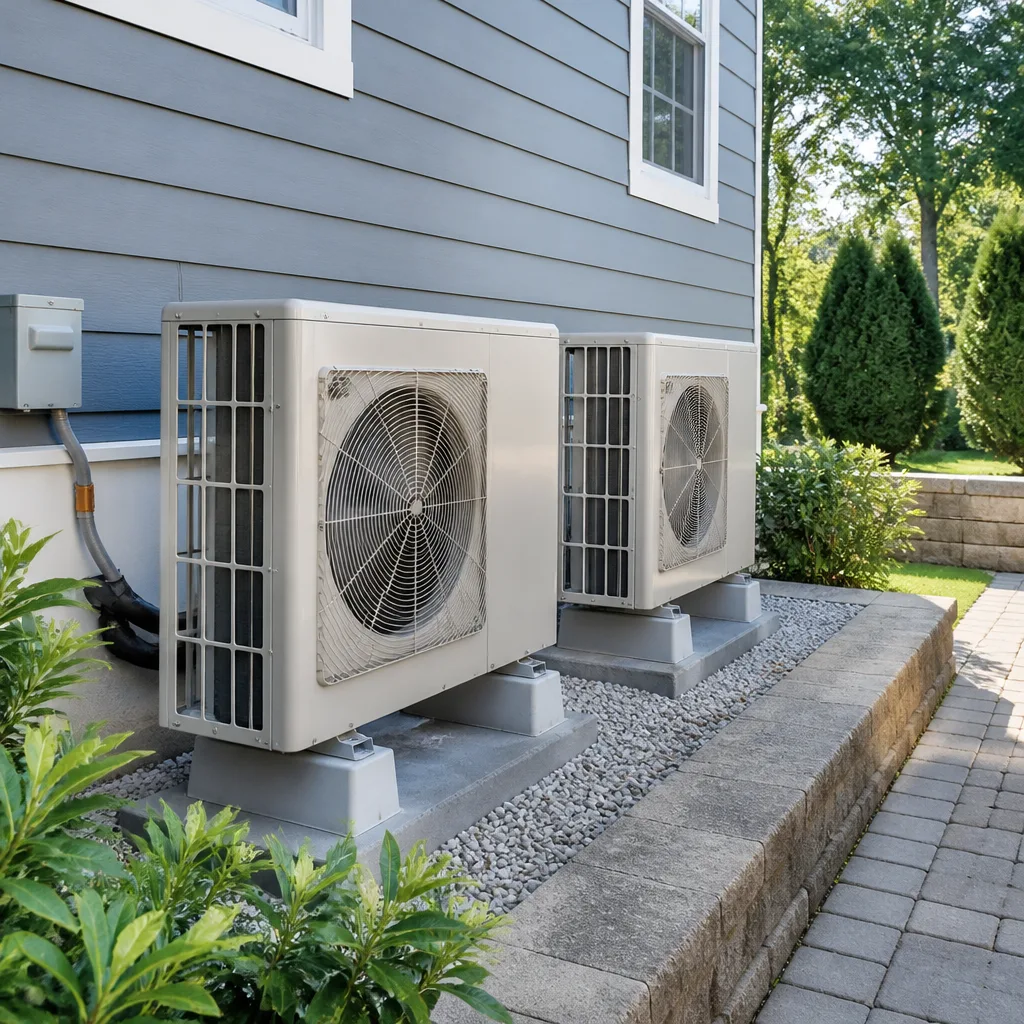 Heat pumps
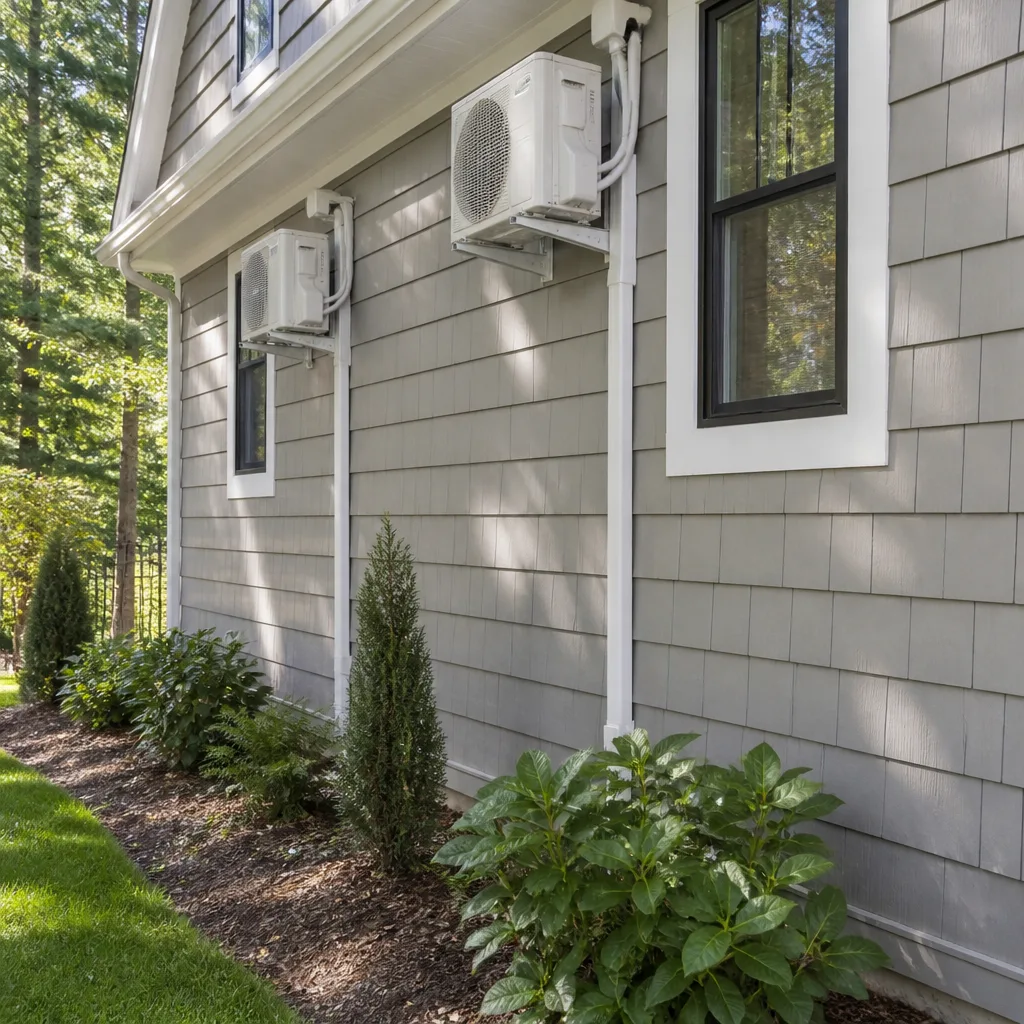 Ductless mini splits
 Carrier
 Trane
 Goodman
Seasonal tune-up and full diagnostic on your Carrier, Trane, or Goodman system - readings shown to you before any repair is proposed
Diagnosis first, numbers second - you approve the repair price before a single part goes in.
Get your free estimateHVAC Cost Breakdown: The Coral Springs Homeowner’s Reference for 2026
Two contractors can quote the same 3-ton replacement in Coral Springs and land $3,000 apart. One number isn’t a rip-off and the other isn’t a bargain – the gap is in what each quote actually covers. A base price that skips permit fees, refrigerant, disposal, and warranty registration isn’t cheaper; it’s just incomplete. That’s the single most useful thing to understand before you sign anything in 2026, a year when refrigerant rules, county permitting, and a tight certified-technician labor market have all shifted what a fair price looks like. This guide gives you realistic numbers for every major HVAC job in Coral Springs, broken down line by line, so you can read a quote and know exactly what you’re paying for.
Quick Answer
A full AC system replacement in Coral Springs typically runs $7,500-$11,200 for a standard single-stage system in 2026, with two-stage and variable-speed equipment landing higher. Routine repairs generally fall between $180 and $950 depending on the part, and a complete furnace replacement typically runs $4,200-$8,500. The written estimate sets the final price – these are typical ranges, not quotes, and the difference between two bids almost always comes down to what’s included.
Styles & brands we work with
- AC repair
- Furnace & heating
- Heat pumps
- Ductless mini splits
- Carrier
- Trane
- Goodman
Table of Contents
- What does the equipment itself cost by system type in 2026?
- What does labor cost in Coral Springs specifically?
- What’s actually in a full replacement quote, line by line?
- What rebates are available in 2026, and how do you verify them?
- Repair or replace: how do you run the math?
- What does delaying replacement actually cost you?
- What do Broward County permits add, and why they matter
- How do you get comparable quotes in Coral Springs?
What does the equipment itself cost by system type in 2026?
Equipment is the largest single line on any replacement quote, and 2026 pricing reflects a market still settling after the refrigerant transition that reshaped the industry. New systems now use newer refrigerant blends, and manufacturers have priced equipment to reflect the retooling and refrigerant cost behind that change. Here’s how the equipment tiers break down for a typical Coral Springs home:
- Single-stage systems: $3,200-$4,800 for the equipment alone. One speed, on or off. The most common replacement choice for homeowners who want straightforward cooling and a lower upfront number.
- Two-stage systems: $4,600-$6,400. Two operating speeds that run longer at lower output, which handles Coral Springs humidity better and tends to even out indoor temperatures.
- Variable-speed systems: $6,800-$9,500. The top tier. These ramp up and down in fine increments, run quietly, and dehumidify well – a real consideration in a climate where moisture control matters as much as temperature.
- Heat pump systems: $4,400-$7,200. Since our winters are mild, a heat pump handles both the cooling season and the handful of cool stretches a Coral Springs year brings, which is why they’re worth comparing against a straight AC-plus-furnace setup.
Brand choice moves the number, too. A Goodman or Rheem single-stage system tends to sit lower on the equipment ladder than a comparable Lennox or York premium tier, and the gap between brands isn’t always a gap in reliability. We work on nine major brands – Carrier, Trane, Lennox, Goodman, Rheem, York, Daikin, Bryant, and American Standard – so our equipment advice follows your budget and your home, not a dealer incentive to push one name. If you’re weighing a full changeout, our AC installation page covers how sizing and load calculation fit into the equipment decision.
What does labor cost in Coral Springs specifically?
National average labor figures are close to useless here. Broward County sits in one of the country’s most competitive HVAC labor markets, and EPA-certified technicians who can handle refrigerant work command a real premium. That premium shows up in every job type, and it varies by what’s actually being done:
- Full system install: $2,400-$4,200 in labor. This covers removal of the old equipment, setting the new air handler and condenser, connecting refrigerant lines and electrical, charging the system, and commissioning it. It’s the biggest labor line because it’s the most involved job.
- Standard repair: $150-$450. Capacitors, contactors, blower motors, thermostats, and similar components. The labor here is modest; the part drives the variance.
- Coil replacement: $900-$1,800 for labor and refrigerant combined, separate from the coil part itself. Coils are among the more labor-intensive repairs, and refrigerant recovery and recharge add to the total.
- Duct work: $600-$2,800 depending on scope. Sealing and rebalancing a few runs sits at the low end; a partial duct redesign or replacement sits higher, because attic work in a Coral Springs summer is slow, careful work.
Our technicians have up to 13 years of experience, and that matters more than it sounds in a market where a botched install costs far more to fix than a careful one costs upfront. A system installed with the wrong charge, an undersized return, or a sloppy seal will underperform for its entire service life. Labor isn’t the place to chase the lowest bidder.
What’s actually in a full replacement quote, line by line?
This is where that $3,000 gap between quotes lives. A complete replacement quote should show every one of these items. If a bid is missing several of them, the total isn’t really lower – the costs just haven’t surfaced yet.
- Equipment (condenser and air handler): The base cost covered above. Confirm the model numbers in writing so you can verify the efficiency rating and the warranty tier.
- Labor and installation: Removal, setting, connecting, charging, and commissioning. See the ranges above.
- Broward County permit fees: A replacement requires a permit, and the fee is a legitimate line item. Most cities require a permit for HVAC replacement, so ask your city’s building department about the specific fee for your address rather than assuming. A quote that skips the permit entirely is a red flag.
- Disposal and haul-away: Removing the old condenser, air handler, and any refrigerant. Refrigerant must be recovered by law, not vented, and recovery equipment and handling add real cost.
- Refrigerant charge: The line set length determines how much refrigerant the system needs beyond the factory charge. Longer runs, or a line set that needs replacing, add to this line.
- Warranty registration: Manufacturer warranties are frequently void unless the equipment is registered, often within a set window after install. Registration is paperwork, but skipping it can cost you years of coverage. Confirm the quote includes it.
- Thermostat and any controls: Sometimes bundled, sometimes separate. Ask which it is.
- Duct modifications, if needed: A new system sized differently from the old one may need duct adjustments to perform as rated. A quote that ignores this can leave you with a well-made system that can’t deliver its rated efficiency.
Compare quotes on this full list, not on the bottom-line number alone. Two bids that look $3,000 apart often converge once every line is accounted for. For a closer look at the heating side of the equation, our furnace repair page explains what replacement versus repair looks like on that end.
What rebates are available in 2026, and how do you verify them?
Rebate amounts and program rules change, and the single most expensive mistake is buying equipment and then asking whether it qualified. The order matters: verify first, purchase second. Here’s how to do it properly.
- Check FPL’s current program terms before you choose equipment. Efficiency rebates are tied to specific efficiency ratings and specific equipment. Confirm the exact model you’re considering appears on the current qualifying list, not last year’s.
- Check Broward County and municipal programs separately. County and city incentives don’t always mirror utility programs, and eligibility rules differ. Confirm what applies to your address.
- Get the qualifying model number in writing from your contractor. The rebate hangs on that number. If the contractor can’t name it before install, don’t count on the rebate.
- Confirm who submits the paperwork and by when. Many rebate programs have submission deadlines tied to the install date. Ask directly whether the contractor handles the filing or whether it’s on you.
- Budget as if the rebate won’t arrive. Treat any rebate as a welcome reduction, not a discount you’re relying on to make the purchase work. Programs change, and a rebate that doesn’t materialize shouldn’t break your budget.
We’ll walk you through the current FPL and Broward County program terms and help you verify eligibility before you commit to a system. Call (833) 501-2993 for a free estimate and ask us to check the model against the current qualifying list – it’s a conversation worth having before the equipment is ordered, not after.
Repair or replace: how do you run the math?
The honest answer is that repair usually wins when the system is younger, the repair is a single component, and the rest of the equipment is sound. Replacement usually wins when the system is older, the repair is major, and a second failure is likely soon. The tricky part is the middle ground, and that’s exactly where an honest cost-benefit answer matters most. A few rules of thumb that hold up in our experience in Coral Springs:
- The age of the system. Older units running on older refrigerant are harder and more expensive to repair, because the parts and refrigerant get scarcer. Once a system is well into its second decade, a major repair is often money spent on a system with limited life left.
- The size of the repair relative to replacement. A compressor or coil replacement on an aging system can approach a meaningful fraction of a new install. When a single repair starts to look like a down payment on a new system, the math shifts.
- Efficiency penalty of the current unit. An older system that’s lost efficiency runs longer and costs more to operate every month. That’s a recurring cost the repair doesn’t fix.
- How many repairs in a short span. One repair is normal. Three in two years on the same system is telling you something.
We offer both repair and replacement, which means we can give you the honest comparison rather than defaulting to the option that suits a narrower service menu. If you’re on the fence, our AC installation team can size a replacement alongside a repair quote so you can see both numbers side by side.
What does delaying replacement actually cost you?
Aging systems don’t fail all at once – they lose efficiency gradually, and the loss is easy to miss because it shows up as a slowly rising power bill rather than a dramatic breakdown. Here’s how to think about the cost of waiting, without any invented figures:
- Watch your bill trend. If your summer bills are creeping up year over year with no change in usage habits, the system is likely working harder for the same result. That difference is the efficiency penalty, and it’s real money over a couple of seasons.
- Count the repair money. Every repair on an aging system is money that doesn’t carry forward to a new one. Add up the last two years of repairs and compare that total against the cost of a replacement spread over the new system’s expected life.
- Consider the risk, not just the cost. A system that fails in the middle of a hot Coral Springs summer is an emergency – and one that always happens at the worst time. Planning a replacement on your schedule costs less stress than replacing under duress.
- Factor in the rebate you might be leaving on the table. The window for a given rebate isn’t open forever. Waiting a year can mean a different program, a smaller incentive, or none.
The math doesn’t need to be perfect to be useful. If repairs are stacking up, bills are climbing, and the system is old, the efficiency penalty plus repair spending usually makes a solid case for replacing on your terms. If the system is younger and the repair is modest, repair is the right call and we’ll say so.
What do Broward County permits add, and why they matter
A permit is a real line item on a replacement quote, but its bigger value is what it protects. Permit fees vary by municipality and job scope, so rather than quote a number, ask your city’s building department what the fee is for your address and system. Then confirm your contractor has pulled the permit before work starts.
A permitted job gets inspected, and the inspection confirms the installation meets code – proper electrical connections, correct refrigerant handling, and a system set up to manufacturer spec. An unpermitted replacement can create problems when you sell the home, when an insurance claim arises, or when a manufacturer questions warranty coverage. The inspection is also a genuine quality check on work you won’t see inside the condenser. When you compare quotes, ask each contractor whether the permit is included. It’s one of the clearest tells between a thorough bid and a thin one.
Coral Springs sits inside Broward County, so your job falls under county and municipal permitting requirements. We build permit costs into every written estimate so there’s no surprise line later. If a quote you’ve received is suspiciously low, checking the permit line is a good place to start understanding why.
How do you get comparable quotes in Coral Springs?
Getting three quotes only helps if they’re comparable. Otherwise you’re comparing three different scopes and calling it price shopping. Here’s how to make the comparison fair:
- Ask every contractor to quote the same equipment tier and model number. “A 3-ton system” means little. “This specific model at this efficiency rating” is a comparison.
- Require a written, line-item estimate. Equipment, labor, permit, disposal, refrigerant, and warranty registration each as separate lines. A single lump sum hides too much.
- Ask whether the permit is included and who pulls it. Confirm it in writing.
- Ask each contractor to check the same rebate programs against the quoted model. Then you can see whose numbers are current.
- Ask directly: repair or replace, and why? A contractor who can explain the cost-benefit both ways is worth more than one who only recommends the bigger job.
- Get the written estimate and confirm the final price is set by it. Ranges are for planning; the written estimate is what you pay.
Firm, written pricing and a clear scope are the whole point. Clover AC Repair writes estimates that show every line, and we’re happy to sit down with a quote you’ve received from someone else and help you read it.
Common Mistakes to Avoid
- Comparing bottom-line totals instead of scopes. A $7,500 bid and an $11,200 bid for the “same” job usually aren’t the same job. Ask what’s missing from the lower one – the permit, the refrigerant, the duct work – before you decide which is cheaper.
- Buying equipment before verifying the rebate. Rebates attach to specific models and specific programs. Confirm the model qualifies before it’s ordered, not after it’s installed.
- Skipping the permit to save the fee. An unpermitted replacement can create problems at resale, at an insurance claim, or at warranty time. The fee is small next to those risks, especially in a Coral Springs home you may sell.
- Chasing the lowest labor bid on an install. In a competitive Broward County labor market, a bid that’s dramatically lower on labor usually means corners cut somewhere you won’t see until the system underperforms.
- Replacing a system that only needed a repair. Get the repair-versus-replace comparison in writing. If the repair is modest and the system is sound, paying for a full changeout is money you didn’t need to spend.
- Ignoring the efficiency penalty and repair total when deciding to wait. Two years of rising bills plus accumulating repairs often adds up to more than the difference between repairing now and replacing.
- Assuming a heat pump doesn’t fit Coral Springs. Our mild winters make a heat pump a genuinely sensible choice for both seasons, so it deserves a look before you default to AC-plus-furnace.
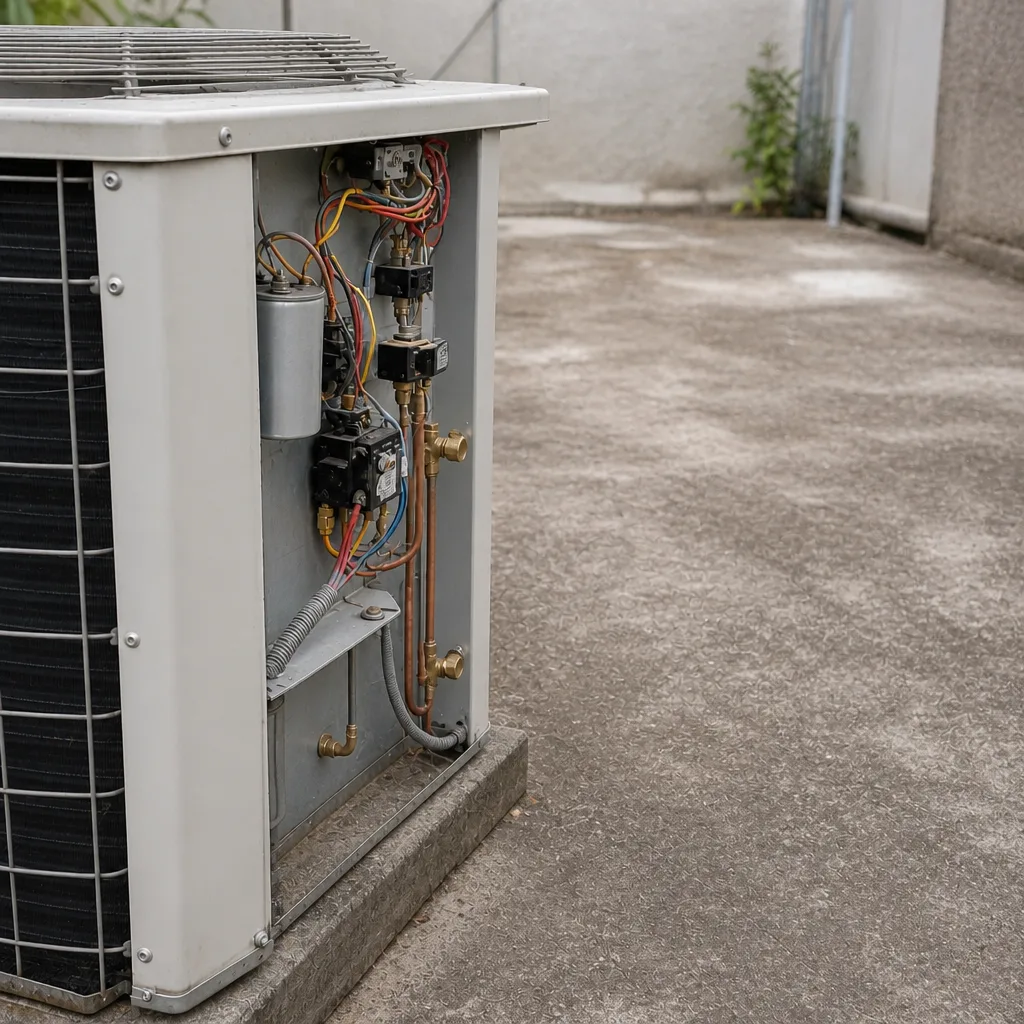
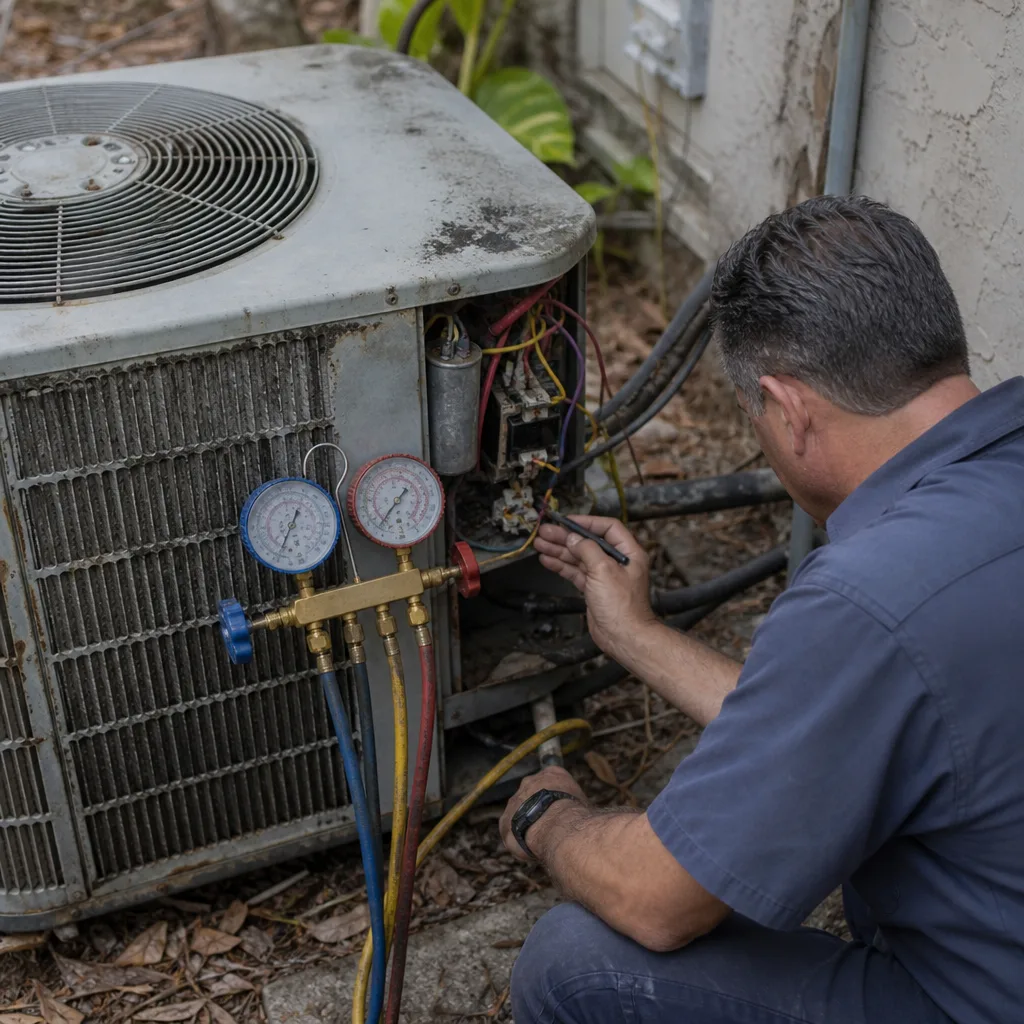
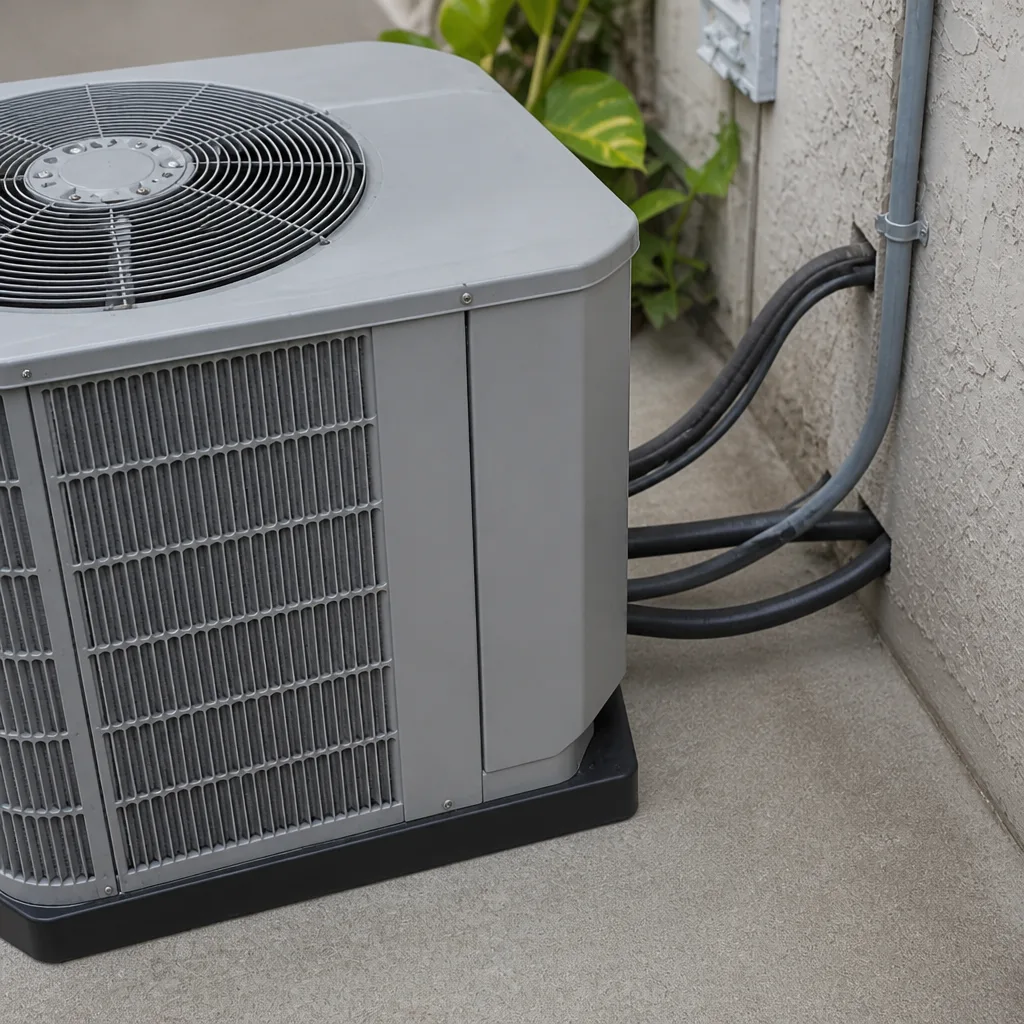
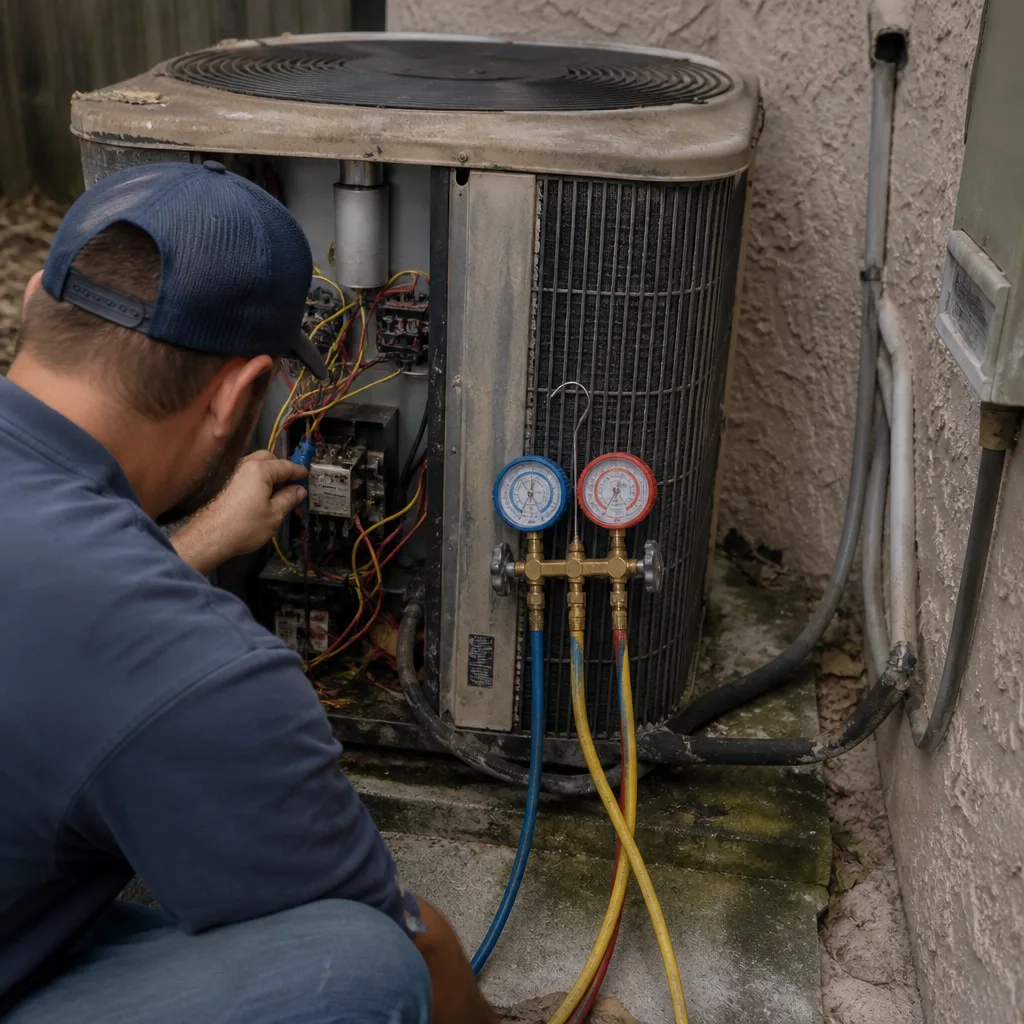
See the difference
 Before
 After
 Before
 After
 Before
 After
When to Call a Professional
Some things are safe to check yourself: a tripped breaker, a thermostat set to the wrong mode, a clogged filter. Beyond that, HVAC work involves refrigerant under pressure, electrical connections, and in the case of the heating side, gas lines. Those are genuinely dangerous to handle without training – a refrigerant mishandled is a hazard, a faulty electrical connection is a fire risk, and gas work should never be DIY. If your system isn’t cooling, won’t turn on, is making unusual noises, or your bill has jumped, that’s the time to call. Clover AC Repair offers free estimates in Coral Springs – call (833) 501-2993. We answer 24/7. Fast dispatch from 7am to 7pm, Sunday through Friday.
Frequently Asked Questions
A full single-stage AC system replacement in Coral Springs typically runs $7,500-$11,200 in 2026, with two-stage and variable-speed systems costing more. The written estimate sets the final price, and what’s included varies a lot between quotes. Call (833) 501-2993 for a free estimate – the number is worth getting in writing.
Yes, FPL and Broward County both run rebate and incentive programs for qualifying high-efficiency equipment in 2026, and the amounts and rules change year to year. Verify the exact model you’re considering appears on the current qualifying list before you buy, not after. Call (833) 501-2993 and we’ll help you check eligibility before you commit.
Repair usually wins when the system is younger and the problem is a single component; replacement usually wins when the system is older, the repair is major, and a second failure is likely soon. Compare the repair cost against the efficiency penalty plus accumulated repair spending. Call (833) 501-2993 for a free estimate that covers both options.
Yes, most cities require a permit for an HVAC replacement, including in Coral Springs. Permit fees vary by municipality and job scope, so ask your city’s building department for the specific fee for your address rather than assuming. Call (833) 501-2993 and we’ll include the permit line in your written estimate.
A full furnace replacement in Coral Springs typically runs $4,200-$8,500 in 2026 depending on equipment tier and scope. Since our winters are mild, the decision often comes down to how much heating you actually use. Call (833) 501-2993 for a free estimate on the heating side.
Same-day repair is often possible for common failures like capacitors, contactors, and motors. Call (833) 501-2993. We answer 24/7. Fast dispatch from 7am to 7pm, Sunday through Friday, and the price is set per job by the written estimate.
The Bottom Line
HVAC pricing in Coral Springs in 2026 is driven by four things most cost guides don’t spell out: equipment pricing after the refrigerant transition, Broward County permit fees, a competitive certified-technician labor market, and rebate eligibility that has to be verified before purchase. A full replacement typically runs $7,500-$11,200, a furnace replacement $4,200-$8,500, and repairs $180-$950 – but the written estimate is what you actually pay. Compare quotes on the full line item list, not the bottom line. And verify the rebate before the equipment is ordered. Clover AC Repair works on nine major brands with zero brand bias, on both your cooling and heating. One call for your furnace and your AC.
Call (833) 501-2993 for a free estimate. We answer 24/7. Fast dispatch from 7am to 7pm, Sunday through Friday.
Written by the team at Clover AC Repair.