
Last updated November 15, 2026
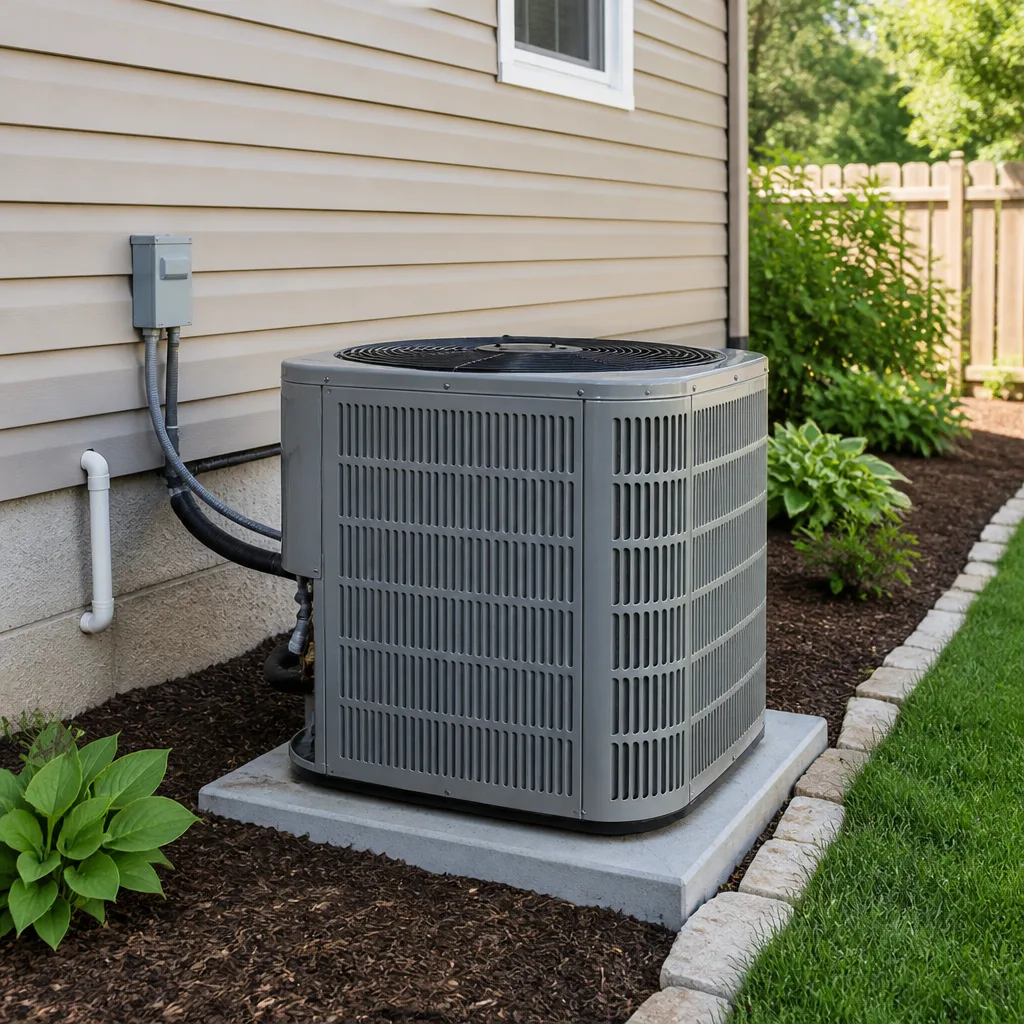 AC repair
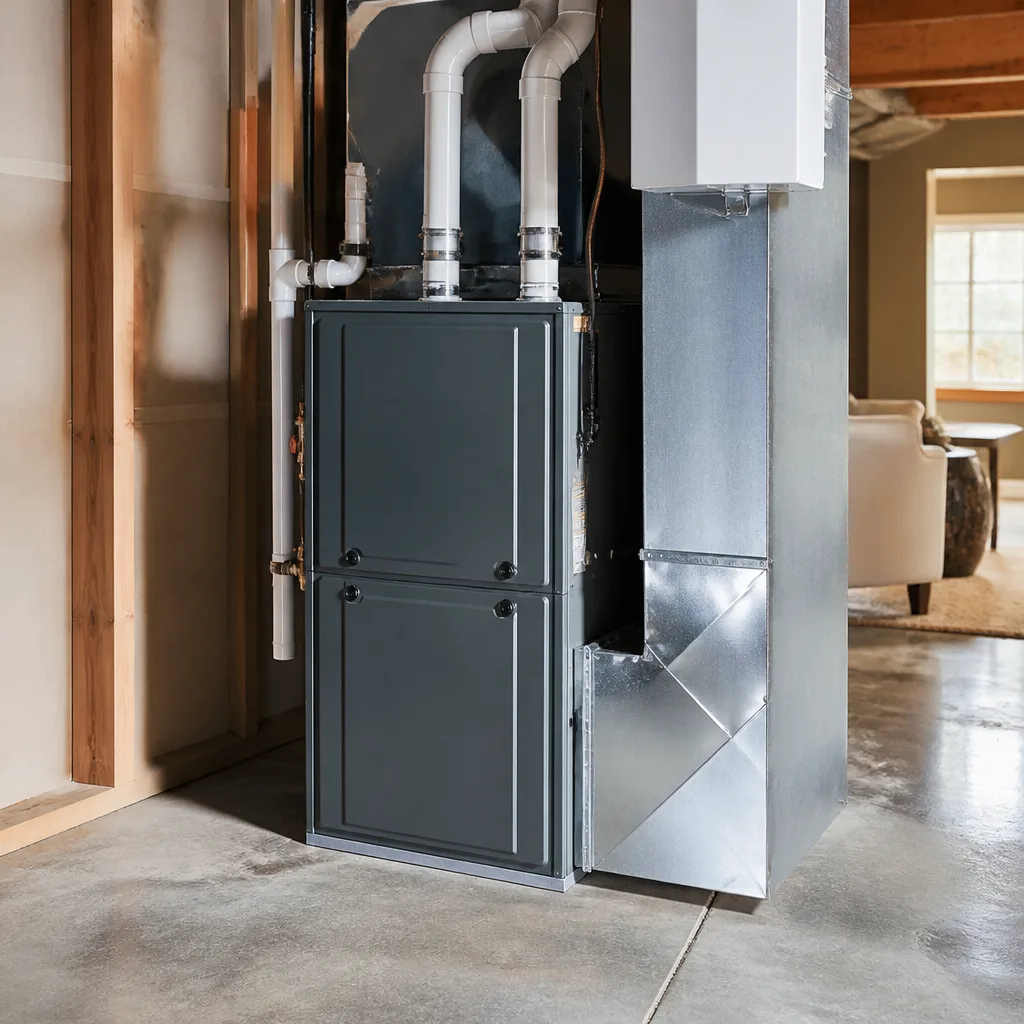 Furnace & heating
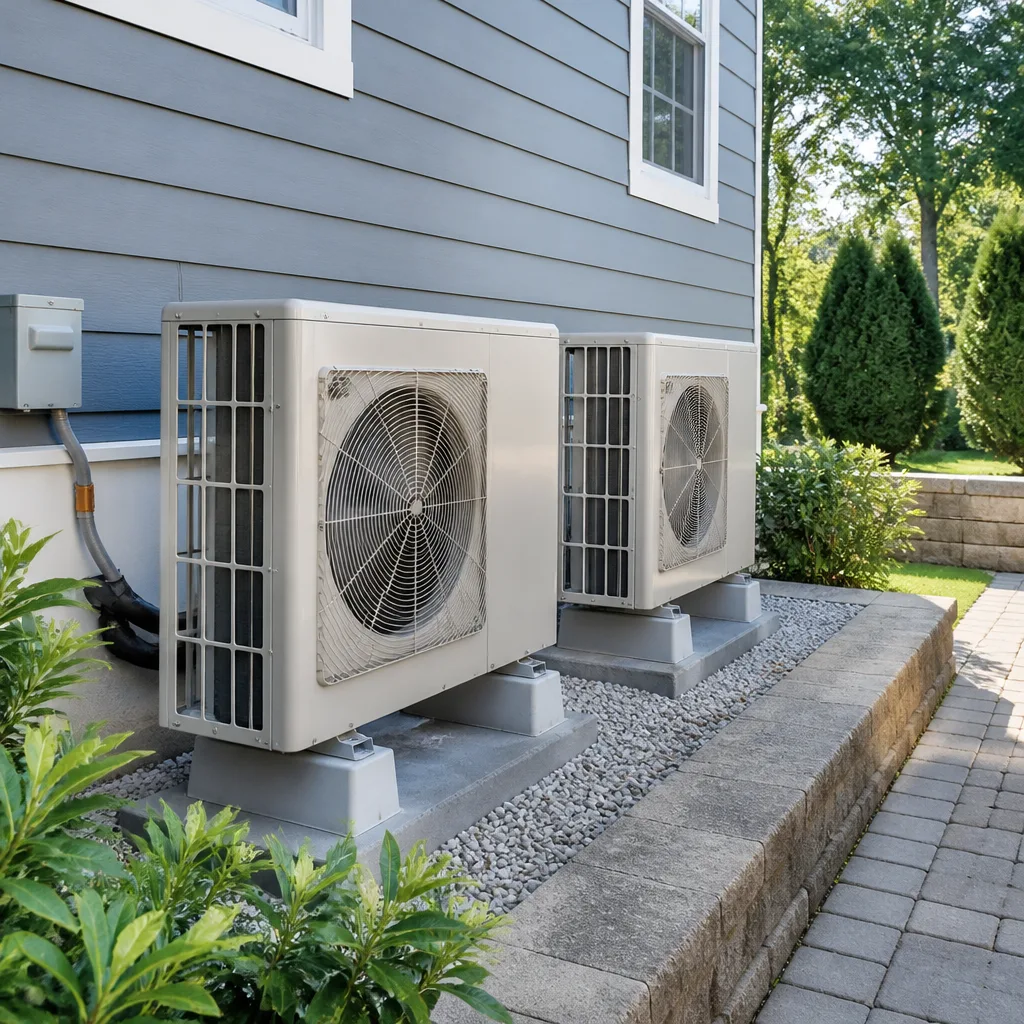 Heat pumps
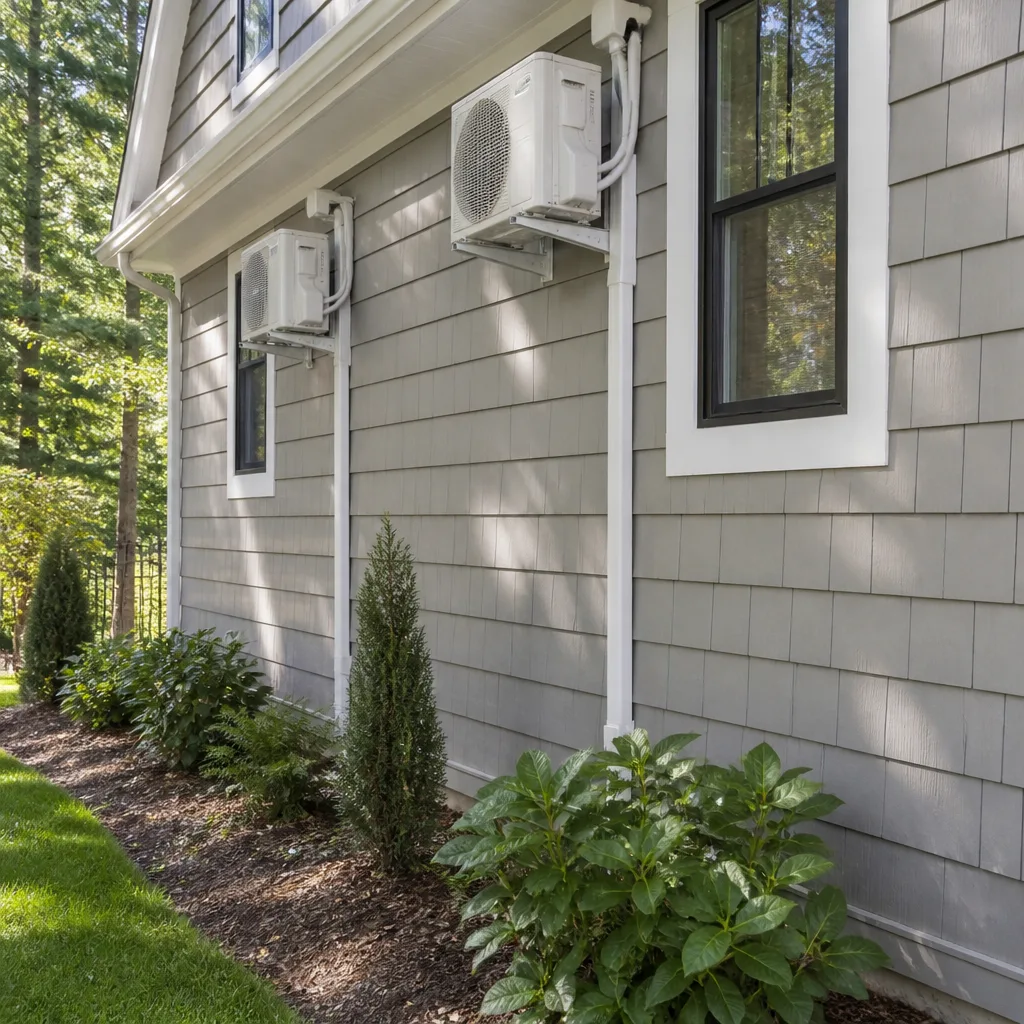 Ductless mini splits
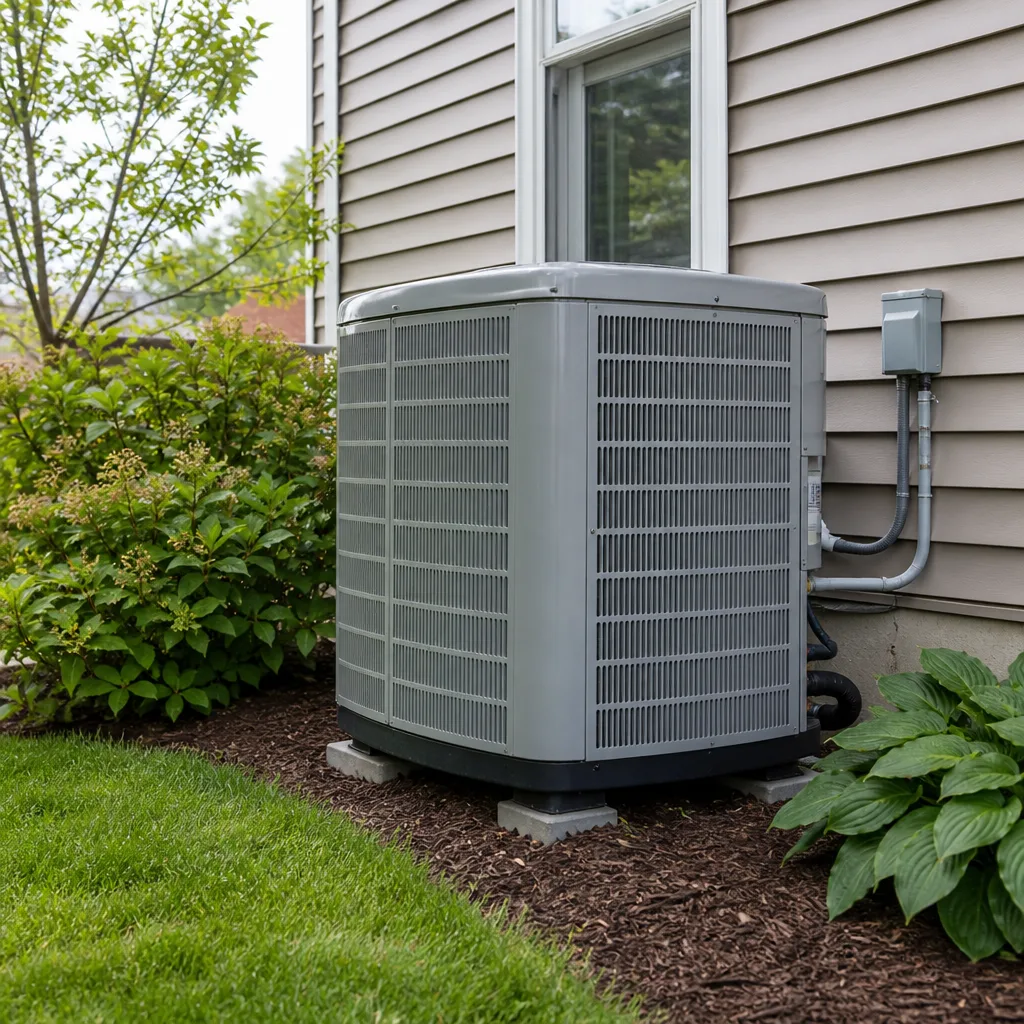 Carrier
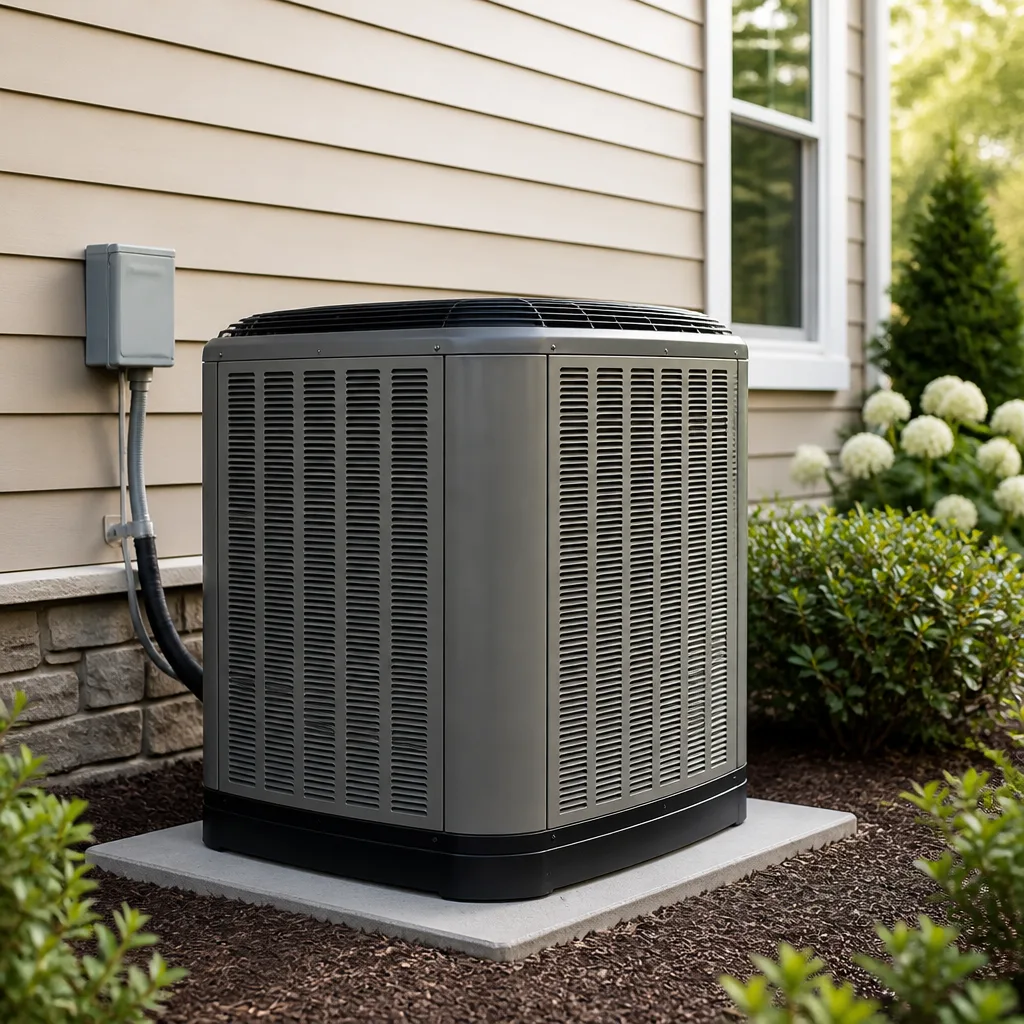 Trane
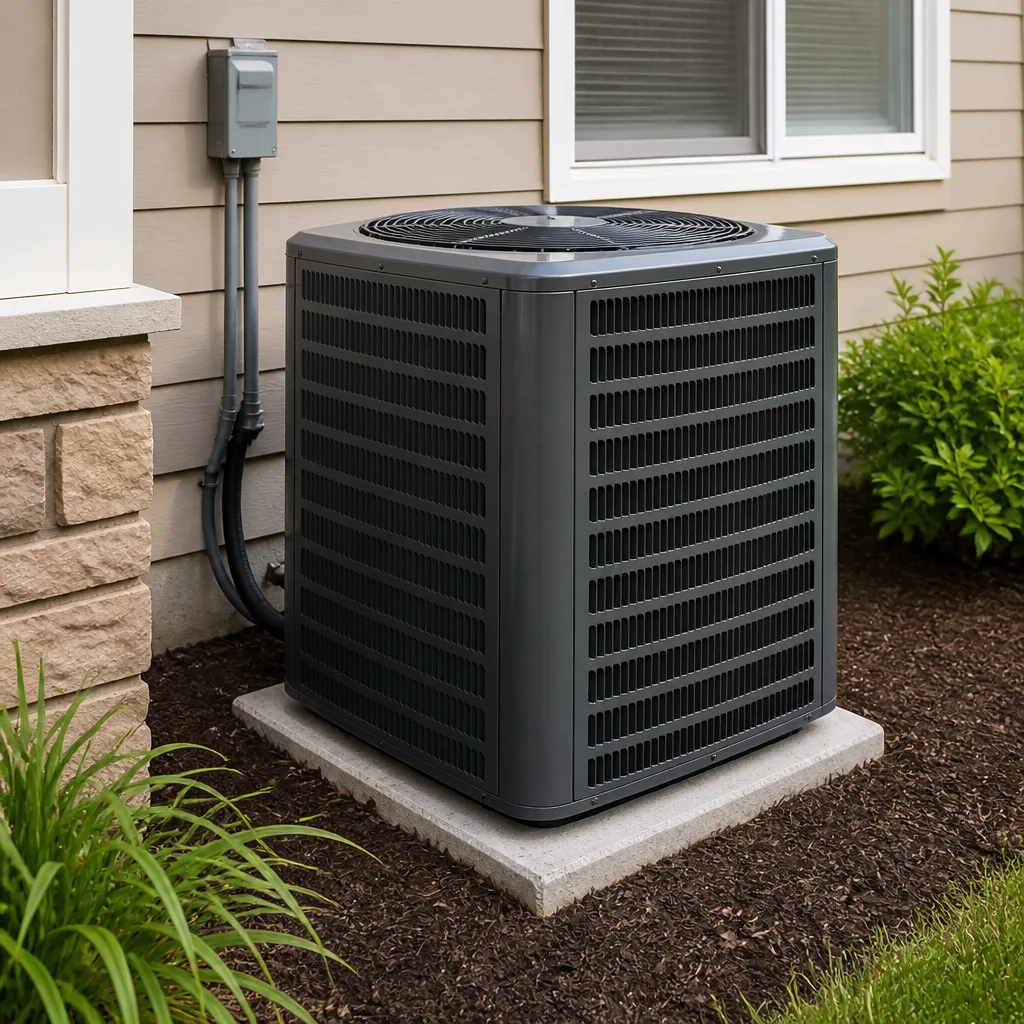 Goodman
Seasonal tune-up and full diagnostic on your Carrier, Trane, or Goodman system - readings shown to you before any repair is proposed
Diagnosis first, numbers second - you approve the repair price before a single part goes in.
Get your free estimateHVAC Warning Signs: A Coral Springs Homeowner’s Reference Guide
Most warning-sign lists tell you to watch for “strange noises” and “warm air.” That’s not a diagnosis, it’s a shrug. The trouble with vague symptoms is that the same warm air coming from your vents can mean a clogged filter you can fix yourself for the price of a filter, or a failing compressor that changes the math on your whole system. In a Coral Springs home where the AC runs nearly every day of the year, that distinction matters. This guide maps specific symptoms to specific causes, tells you how urgent each one is, and shows you how to read your own thermostat and power bill to narrow things down before anyone knocks on your door.
Quick Answer
The most reliable early HVAC warning signs are a slow rise in runtime without a matching change in the weather, hissing or gurgling from the indoor unit, ice on the refrigerant lines, a musty smell from the vents, and water pooling near the air handler. Any of these means something is off with airflow, refrigerant, drainage, or a mechanical component. Mild versions can wait a few days; hissing refrigerant, water overflow, and grinding sounds should be looked at right away.
Styles & brands we work with
- AC repair
- Furnace & heating
- Heat pumps
- Ductless mini splits
- Carrier
- Trane
- Goodman
Table of Contents
- What the Sounds From Your System Actually Mean
- The “It’s Still Cooling, Sort Of” Zone
- Reading Your Bill and Thermostat Together
- Coral Springs-Specific Symptoms: Mold, Ice, and Drain Overflow
- Brand Doesn’t Change the Symptoms, But It Changes the Fix
- Your Symptom-to-Urgency Triage Table
- What Your Technician Is Looking For
What the Sounds From Your System Actually Mean
A properly running system is not silent, but it is steady. It hums, the fan whooshes, and the compressor clicks once at startup. When a sound repeats, changes pitch, or shows up where it didn’t before, that’s the system talking. In the high humidity of South Florida, those sounds carry extra meaning because moisture is always part of the equation.
Here’s how we map the most common ones:
- Hissing or a steady high-pitched whistle. Usually refrigerant escaping from a pinhole in a line or a loose fitting. It’s a pressure problem, not a filter problem, and it won’t fix itself.
- Gurgling or bubbling. Often the sound of refrigerant moving through a system with low charge, or water trapped in a partially blocked condensate drain. Common in Coral Springs during the rainy season, when drains see more water than usual.
- Clicking on startup, then again and again. A single click is normal. Repeated clicking within minutes suggests a failing capacitor or a compressor that keeps trying to start and failing. This is a “call now” sound.
- Grinding or metal-on-metal. Usually the outdoor fan motor bearing or debris striking a blade. Grinding gets worse, never better.
- Rattling in the ductwork. Loose panels, sagging flex duct, or a blower issue. In humid homes, it can also mean a duct connection has come apart, which also means you’re cooling the attic.
- A hum that’s louder than before. Compressor working harder than it should, often because of declining charge, a dirty coil, or a failing motor.
If any of these show up, note how long they last and whether they’re tied to the outdoor unit or the indoor air handler. That single detail saves the technician time and, on a service call, time is money. Call (833) 501-2993 and we can talk through what you’re hearing. We answer 24/7, and fast dispatch runs from 7am to 7pm, Sunday through Friday.
The “It’s Still Cooling, Sort Of” Zone
This is the most underrated and most expensive zone in HVAC. A system that cools the house to 82 when you set it to 76 is still running. It’s still moving some air. It’s just doing it with a compressor that’s working at the wrong pressure, an evaporator coil that’s half-frozen, or a return that’s starved for air. Homeowners interpret “it’s still cooling” as a small problem. It usually isn’t.
Here’s why partial cooling costs more than a clean breakdown:
- It runs longer. A system that takes six hours to reach a temperature it used to reach in two runs six hours of compressor time against two. That’s electricity you’re paying for without the comfort you’re buying.
- It wears components faster. A compressor that’s cycling against low charge or high heat has a shorter life than one designed to run at full charge and clean coils. The replacement you’re pushing off gets closer with every hour.
- It hides the real cause. Partial cooling could be a low refrigerant charge (a leak), a dirty evaporator (an airflow problem), a failing metering device, or a compressor on its way out. The symptoms look alike. The repairs don’t.
- It can freeze up. Low airflow or low charge reduces the coil temperature below freezing. In Coral Springs humidity, a frozen coil can go from “still cooling” to “not cooling at all” overnight.
If your home is cooler than outside but not cool enough, that’s a symptom worth a call, not a wait. We’d rather look at a system that’s limping than replace a compressor that failed. Call (833) 501-2993 for a free estimate on what’s actually wrong.
Reading Your Bill and Thermostat Together
Your power bill and your thermostat are two views of the same story. A bill rising alone tells you something changed. A bill rising while your thermostat sits hours behind schedule tells you the system lost capacity. You can figure out roughly which cause you’re looking at before you call, and that’s useful.
Start with the estimate: the thermostat is the least accurate and the most useful tool you own. Note the setpoint, the actual room temperature, and how many hours the system runs to close the gap.
- High bill, thermostat reaching setpoint (eventually), long runtime. Airflow problem. Check the filter, check that supply registers are open and unblocked, check that the return grille isn’t covered by furniture. Dirty coils also live here.
- High bill, thermostat never reaching setpoint, warm air at the vents. Refrigerant issue or compressor problem. Low charge is the most common culprit, and it comes from a leak. Compare this to a dirty coil, which produces many of the same symptoms but keeps the vent air much closer to target.
- High bill, normal runtime, no comfort complaint. Usually a rate change, a duct leak you can’t feel, or a coil that’s dirtier than it was last year. A duct leak is genuinely common here; the attic is hot and flex duct takes a beating.
- Short, frequent cycles (short cycling). Oversized system, failing capacitor, thermostat misread, or a refrigerant overcharge. Not normal, and worth a diagnostic.
The most useful thing a homeowner can write down is a week of those notes: setpoint, room temp, hours run. If you have a smart thermostat, the runtime graph is right there. Bring it up when you call. It’s the difference between a guess and a plan. If you’d rather skip the homework, we’ll come out and read it with you. Call (833) 501-2993, we answer 24/7.
If it ends up being time for new equipment, see our page on AC installation for what that involves in this climate. If your heat pump or furnace is the side that’s struggling, our furnace repair team covers the heating half of the system too.
Coral Springs-Specific Symptoms: Mold, Ice, and Drain Overflow
Some symptoms show up in Coral Springs that homeowners in drier climates rarely see. The reason is humidity. With relative humidity routinely high and the AC running almost year-round, moisture accumulates in places it wouldn’t in a shorter cooling season. These are the three worth knowing by name.
Musty smell from the vents
A musty, “wet basement” smell coming out of the supply registers is often mold or mildew growing on the evaporator coil or inside the air handler cabinet. The coil stays wet most of the year here, and if the drain pan or the coil surface stays damp for weeks, biological growth is a matter of time, not luck. Sometimes it’s simpler than that: a damp filter or a duct that’s been sweating. Either way, it’s an airflow and moisture problem worth looking at. If you can see a growth film on the coil when the panel comes off, the fix is a proper coil cleaning and a look at drainage, not an air freshener.
Ice on the refrigerant lines or the evaporator coil
Ice on the outdoor refrigerant lines is the classic sign of low charge or restricted airflow. It looks like a simple fix (“let it thaw”) but it isn’t, because when it thaws, the cause remains. Ice on the evaporator coil itself, inside the air handler, is the same story. In an 80%+ humidity environment, a frozen coil also becomes a water source when it thaws, which is why it can lead to a pan overflow below. If you see ice, shut the system off, let it thaw, and get a proper look before turning it back on. Running it frozen causes compressor damage.
Drain pan overflow during rainy season
In Coral Springs, the condensate drain is working against more than just the AC load. During the wet months, the drain sees more volume, and a partially clogged line can back up. The first sign is usually water on the floor near the air handler, sometimes a wet ceiling stain if the pan is in the attic, or a gurgling drain line. Left alone, the overflow soaks drywall, insulation, and framing. Clearing the drain and checking the float switch is a routine job, but it’s not one to postpone during a rainy week. If you’re seeing water, call (833) 501-2993 and we’ll get eyes on it. Fast dispatch from 7am to 7pm, Sunday through Friday.
Brand Doesn’t Change the Symptoms, But It Changes the Fix
A Carrier system and a Goodman system will both hiss when refrigerant escapes. A Trane and a Lennox will both ice up on the coil when airflow drops. The physics of an HVAC system is brand-agnostic; the diagnostics aren’t quite. Certain models have their own quirks: a metering device that fails a particular way, a control board that reports a fault in its own code language, or a fan motor that’s known to wear out faster.
That’s why brand matters less than whether the person diagnosing it has actually worked on your equipment. We’re certified to work on nine major brands: Carrier, Trane, Lennox, Goodman, Rheem, York, Daikin, Bryant, and American Standard. In practice, that means we diagnose what’s actually installed rather than steering you toward a brand a dealer happens to sell. We’ve worked on Carrier systems that needed a control board and Trane systems that needed a metering device, and we’ve never told a homeowner their equipment was “the wrong brand.”
Brand-neutral is also a pricing position, not just a slogan. When your technician can repair what you have, the decision tree narrows to a real question: repair or replace? Our answer is driven by the condition of your equipment and your budget, not by what a manufacturer happens to be pushing that month. If we say repair, we can show you why. If we say replace, we can show you the math. Learn more about Clover AC Repair and how we operate.
Your Symptom-to-Urgency Triage Table
This is the table we’d want every Coral Springs homeowner to have on the fridge. It converts vague warning signs into a decision, so nobody calls at 2am for a filter and nobody waits a week on a compressor.
| Symptom | Most Likely Cause | Urgency |
|---|---|---|
| Mild musty smell, system otherwise fine | Damp filter or minor coil growth | Monitor – address in the next few weeks |
| Warm air but the fan runs | Refrigerant leak or failing compressor | Call now |
| Hissing from the outdoor unit | Refrigerant leak | Call now |
| Gurgling in the drain line | Partially clogged condensate drain | Schedule soon |
| Ice on refrigerant lines | Low charge or airflow restriction | Call now – shut off the system |
| Repeated clicking at startup | Capacitor or failing compressor | Call now |
| Grinding from the outdoor fan | Motor bearing or blade obstruction | Call now |
| Water near the air handler | Drain pan overflow or clogged line | Call now |
| Long runtime, still reaching setpoint | Airflow issue or dirty coil | Schedule soon |
| Short cycling on and off | Oversized system, failing capacitor, thermostat | Schedule soon |
| Bill up, comfort normal | Duct leak, rate change, or slowly degrading coil | Monitor – review within a month |
| No cooling at all | Wide range: capacitor to compressor to control board | Call now |
Print it, screenshot it, whatever works. If the row you’re dealing with says call now, call (833) 501-2993. We answer 24/7. Fast dispatch from 7am to 7pm, Sunday through Friday.
What Your Technician Is Looking For
When a technician arrives, the diagnostic process is a checklist that moves from cheap and simple to expensive and invasive. Understanding the order saves you from paying for a diagnostic step that could have been handled at home.
- Filter and airflow check. The filter, the return grille clearance, the supply register openings, and the blower. A clogged filter causes more “partial cooling” complaints than any single component failure.
- Thermostat and control check. Is the setting what the homeowner thinks it is? Is the thermostat calibrated? Is there a fault code on the board?
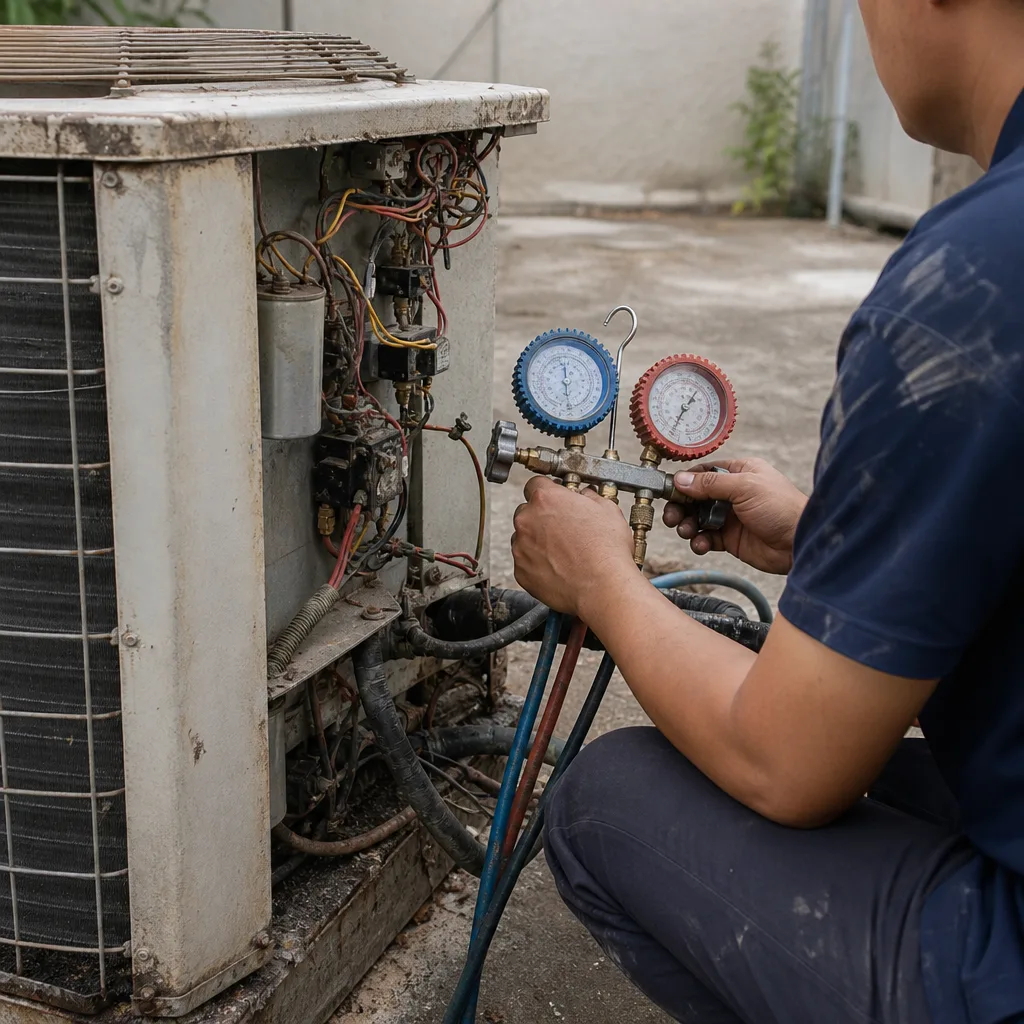
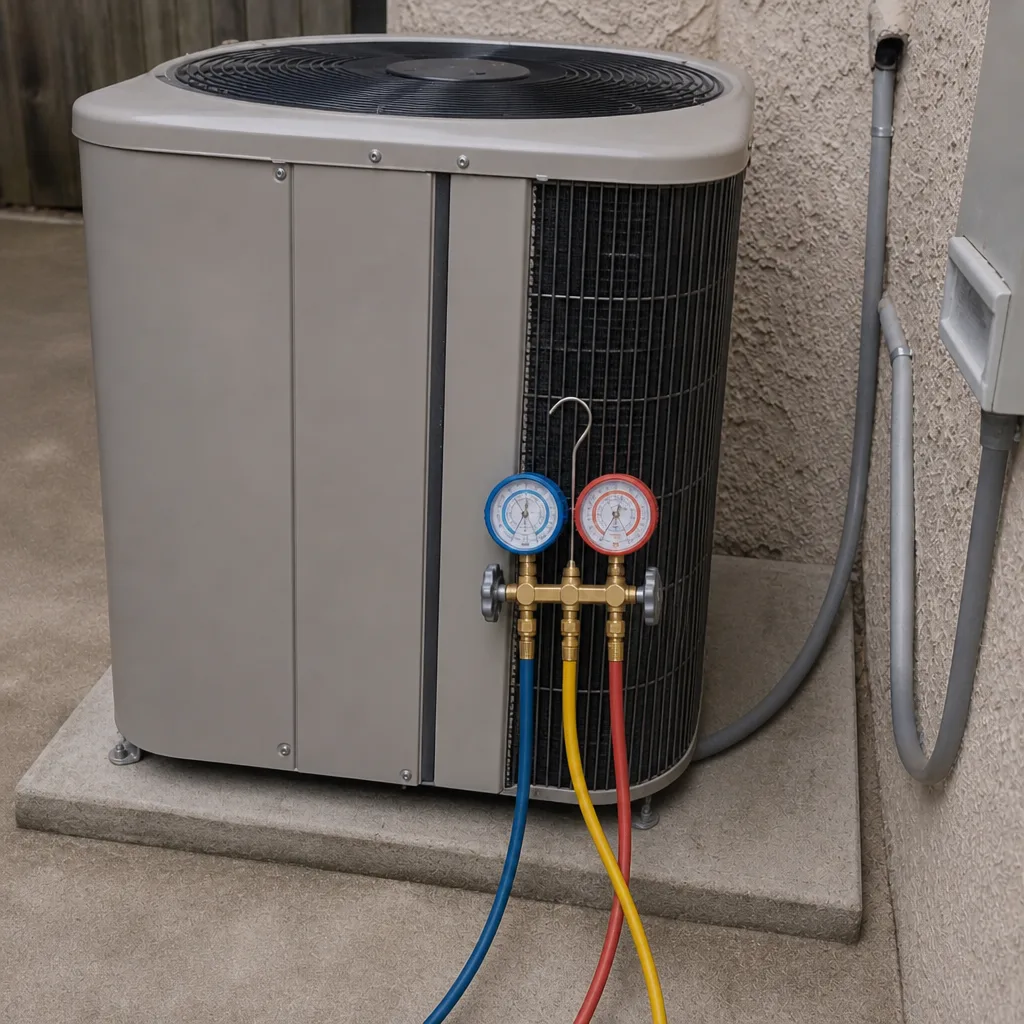
- Refrigerant pressures. Both suction and liquid line pressures, cross-checked against outdoor temperature. This is what separates a charge issue from an airflow issue.
- Superheat and subcooling. Two measurements that tell you how far the system is from spec. Low charge, high charge, a failing metering device, or a partially restricted line all show up differently here.
- Electrical components. Capacitors, contactors, motor windings, compressor amp draw. A failing capacitor is one of the most common single-component failures we see, and one of the cheapest to fix.
- Coils and drains. Visual inspection of the evaporator, the condensate pan, the drain line, and the float switch.
- Duct and enclosure. Look for disconnected flex duct in the attic, especially in a home older than a few years, and check that return air is actually making it back to the air handler.
Only after these steps does a repair-or-replace conversation make sense. If a technician skips to “your system is old” without checking refrigerant pressures and airflow, that’s a sign you’re talking to someone selling equipment rather than diagnosing a problem. Our technicians have up to 13 years of experience and the diagnostics are the same order every time. If you’re ready for a look, call (833) 501-2993 for a free estimate.
Common Mistakes to Avoid
- Setting the thermostat lower to “force” the system to cool faster. It doesn’t work. It extends runtime without changing the outcome. In a Coral Springs home on a hot afternoon, a lower setpoint means more compressor time, not a faster cooldown. Set it to the temperature you actually want and let the system try to reach it.
- Swapping to a thicker, “better” filter without checking the pressure drop. A higher MERV rating isn’t automatically better. In a humid climate where the system runs long, a restrictive filter starves the coil of airflow and can freeze it. Match the filter to what the system was designed for.
- Ignoring “it’s still cooling, sort of.” Partial cooling is the most expensive symptom on the list because it looks mild. A struggling compressor costs more to run and heads toward a full replacement faster than a clean breakdown.
- Assuming a musty smell is just “Florida.” It isn’t. A damp smell means moisture is collecting somewhere, and in Coral Springs it’s often on the coil, in the pan, or in a duct that’s been sweating. It’s worth diagnosing.
- Letting the drain line go uncleared through the rainy season. The one routine maintenance item most worth doing here is keeping the condensate drain open and the pan clean. A backed-up drain is a drywall repair and an HVAC repair in one.
- Paying for a “tune-up” that turns out to be a filter swap. Ask what gets checked and what the written report looks like. A real diagnostic includes pressures and electrical readings. If you’re not shown a report, you bought a filter.
- Buying a replacement brand you didn’t need. If your Goodman or Bryant system has a bad capacitor, a new Carrier system is not the fix. Brand-neutral really means the recommendation follows the diagnosis.
See the difference
 Before
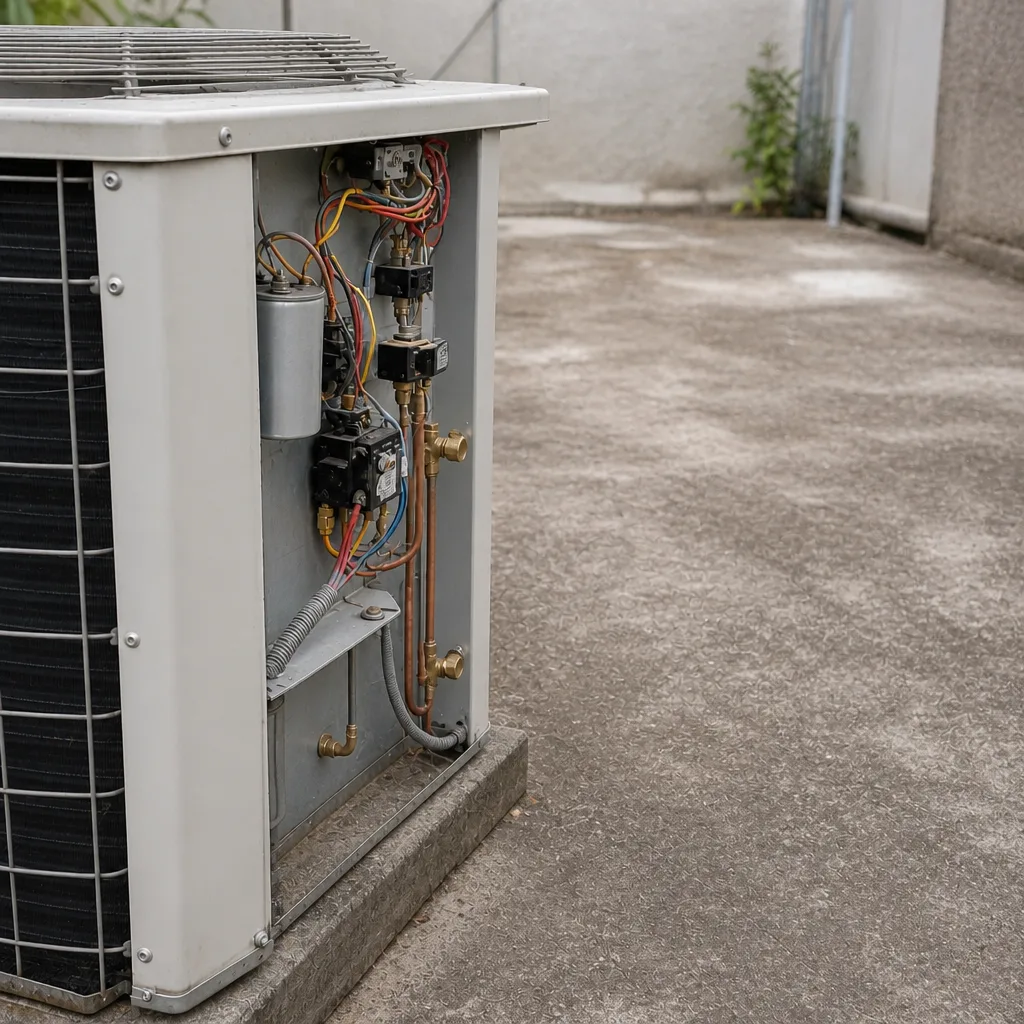 After
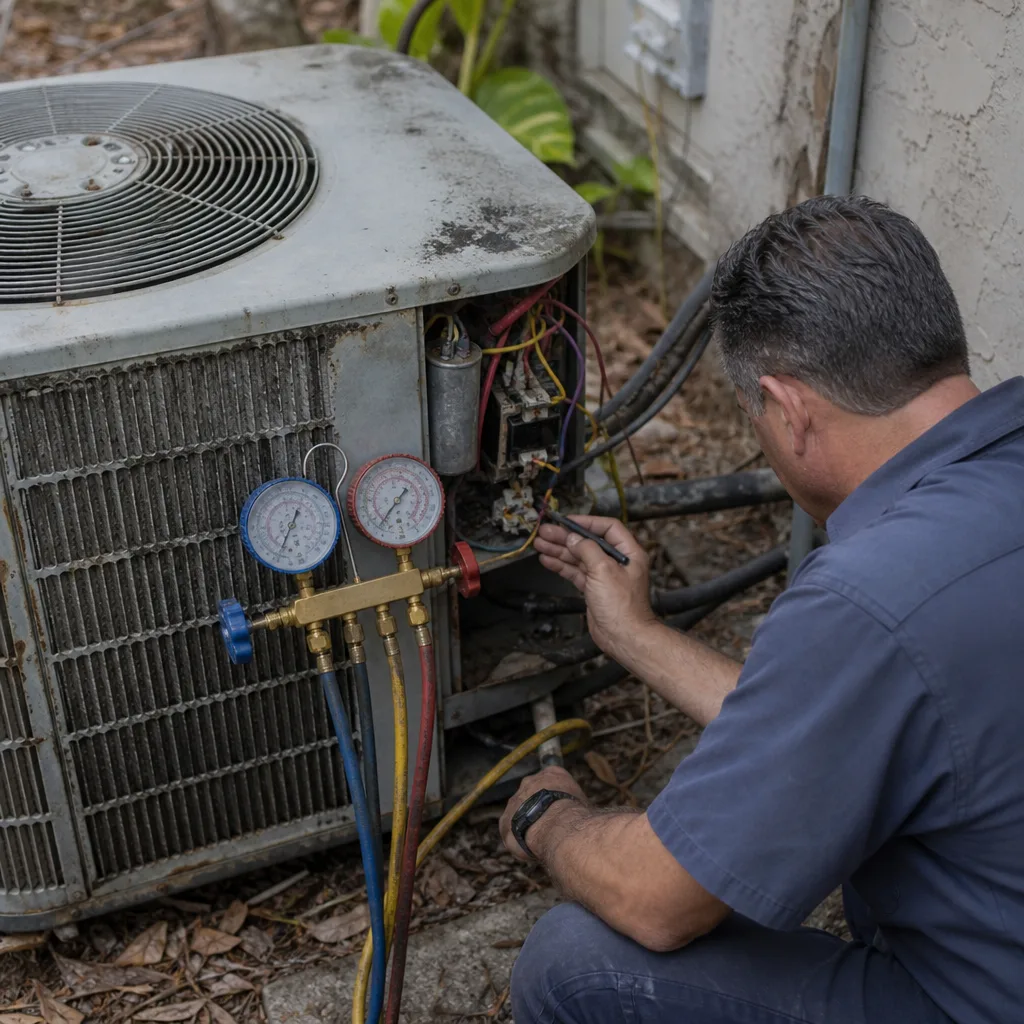 Before
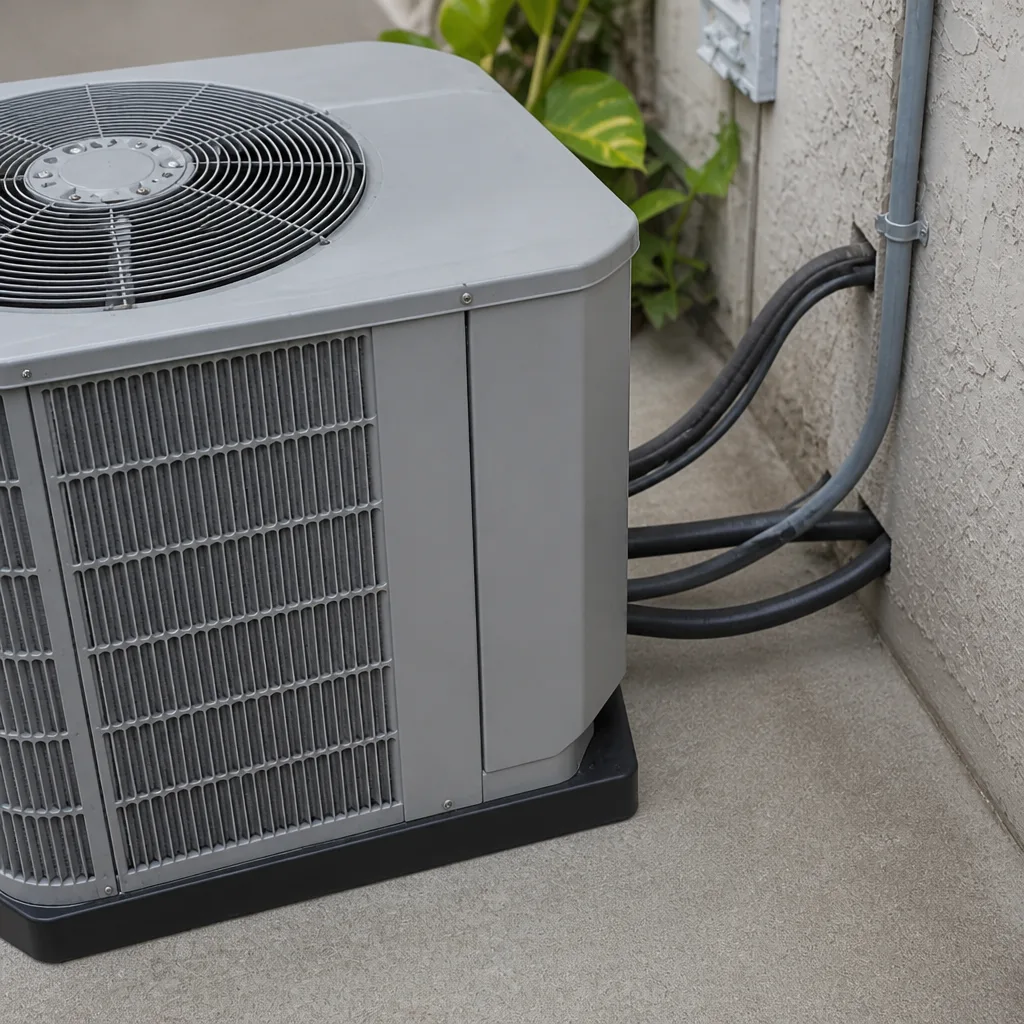 After
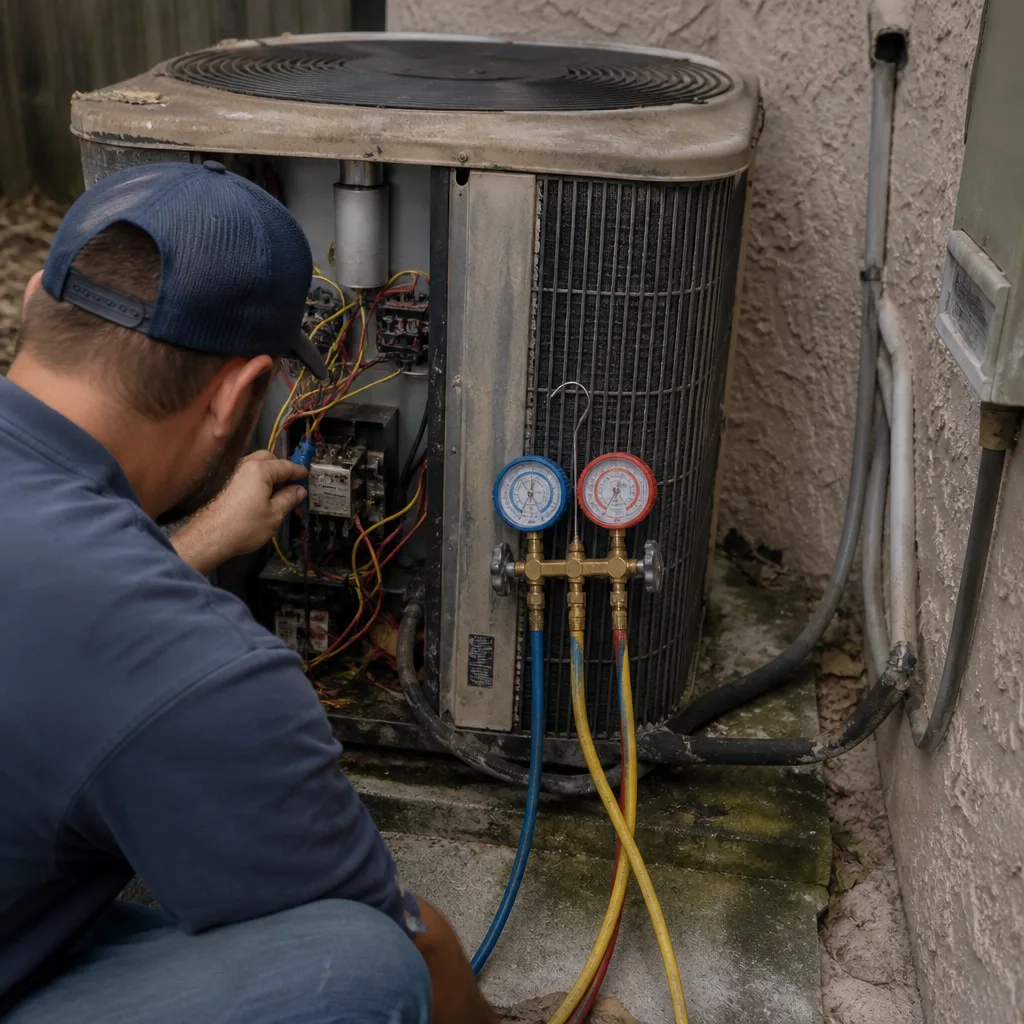 Before
 After
When to Call a Professional
Call a professional when the row on the triage table says “call now” and when the symptom has been there for more than a few days. Hissing refrigerant, ice on the coil, water from the pan, repeated clicking, and grinding are all signals to stop running the system and get a diagnosis. Warm air at the vents when the fan is running is also a call-now scenario, because the compressor runs while producing nothing. Partial cooling that’s worsened over weeks is a schedule-soon call. The same goes for a bill that’s quietly rising while comfort is holding. Any of these in a Coral Springs home is worth a look sooner than later. Clover AC Repair offers free estimates in Coral Springs. Call (833) 501-2993. We answer 24/7, with fast dispatch from 7am to 7pm, Sunday through Friday.
Frequently Asked Questions
A slow rise in runtime without a matching rise in outdoor temperature is the single most reliable early sign. It means the system is working harder to deliver the same result, which points to a refrigerant, airflow, or compressor issue before the symptoms get louder. Call (833) 501-2993 for a free estimate if yours is running longer than usual – we’ll tell you what the readings say.
No, but it’s more serious than it feels. Partial cooling is the most expensive zone because the system runs longer, wears faster, and can freeze if left alone. It usually traces back to a refrigerant leak, a dirty evaporator coil, or a failing blower. Call us to schedule a diagnostic before it turns into a no-cooling call.
In this humidity, moisture collects on the evaporator coil and in the drain pan almost year-round, which is ideal for mold and mildew. The fix is usually a coil cleaning and a check of the drain and ductwork, not a filter change. If it smells damp, call (833) 501-2993 and we’ll find the source.
Both are possible, which is exactly why it needs a proper diagnostic. Low charge and restricted airflow both drop the coil temperature below freezing, and the symptoms look identical from the outside. The technician checks pressures and airflow to tell which one it is. Call (833) 501-2993 for a diagnostic before running the system frozen.
Read your thermostat data and your power bill together. Long runtime and warm air with the room temperature never reaching setpoint points to refrigerant. Long runtime with the room temperature close to setpoint but the bill rising points to airflow. Your technician confirms with pressures and superheat/subcooling readings. Call for a free estimate and we’ll bring the gauges.
Yes, we work on your brand, whatever it is. We’re certified to service nine major brands, including Carrier, Trane, Lennox, and Goodman, so you don’t need to find a brand-specific dealer to get a diagnosis. If a repair makes sense, we’ll recommend it. If a replacement makes sense, we’ll show you why. Call (833) 501-2993.
The Bottom Line
The symptoms are honest – your system is telling you what’s wrong. What most warning-sign lists miss is the difference between a symptom that’s cheap to fix and a symptom that’s expensive to investigate. That’s what this guide gives you: a map from sound, smell, bill, and thermostat reading to a likely cause and an urgency level. In Coral Springs, add the humidity-specific ones – mold smell, ice on the coil, drain overflow – because they show up here more than they do in drier climates. If you’re not sure which row you’re on, call (833) 501-2993. We answer 24/7. Fast dispatch from 7am to 7pm, Sunday through Friday.
If you’re looking for an HVAC team that works on your existing equipment, whatever brand it is, we’re ready. See our Coral Springs service page for more on what we handle locally. Call (833) 501-2993 for a free estimate. Clover covers it.
Written by the team at Clover AC Repair.