
Last updated November 15, 2026
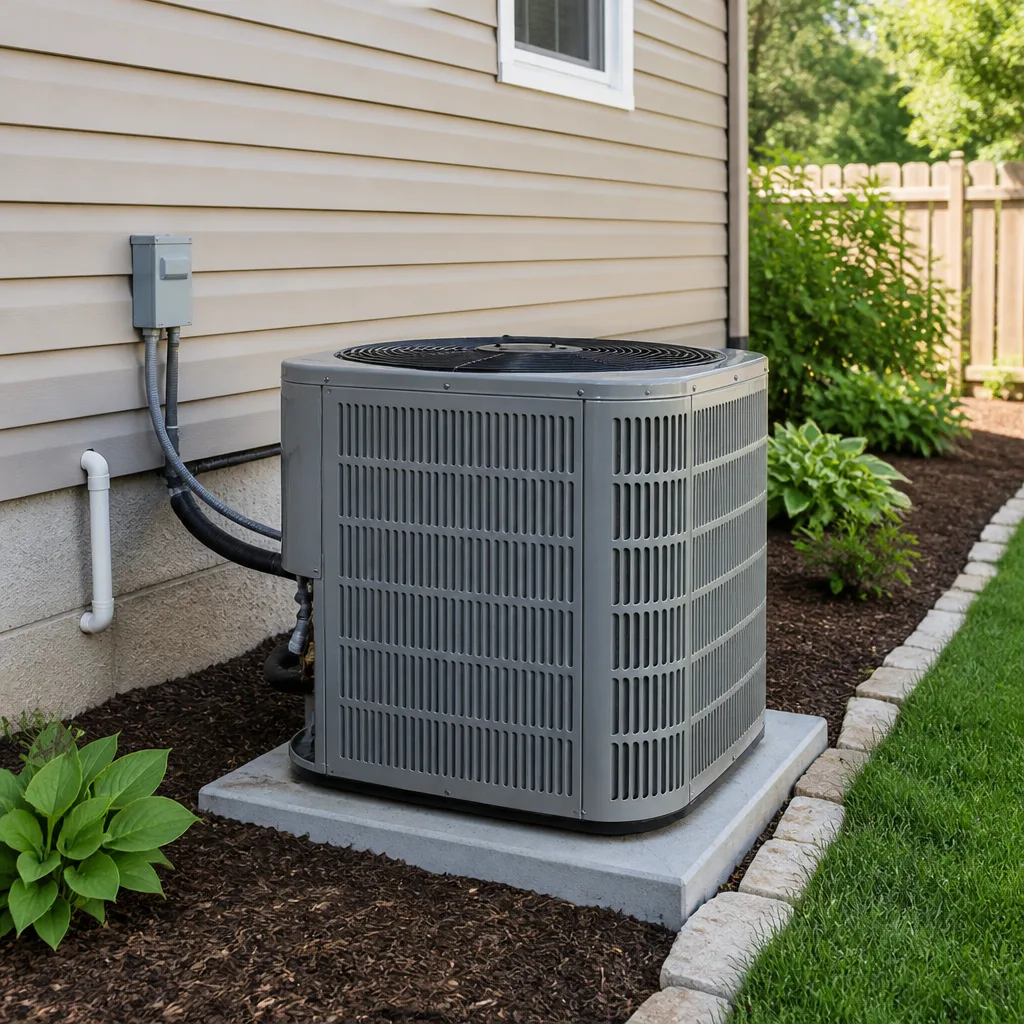 AC repair
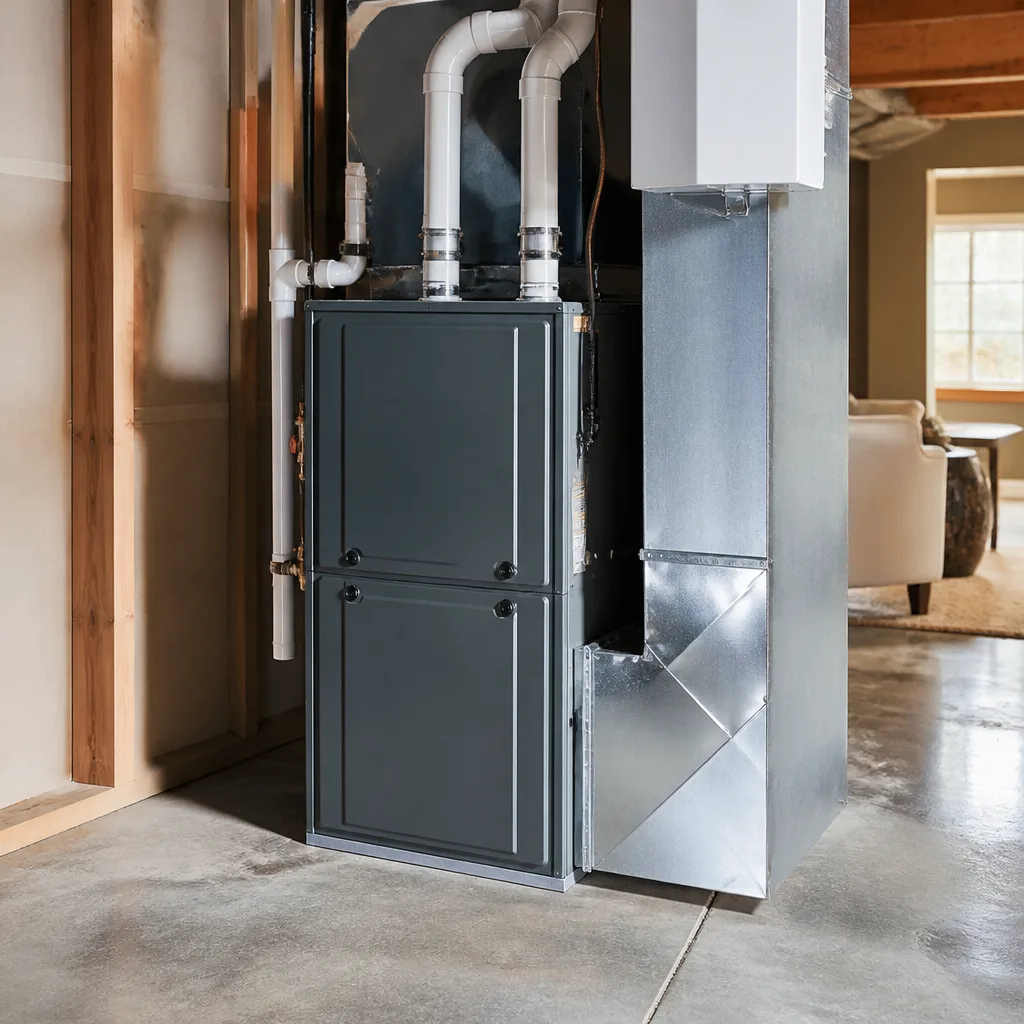 Furnace & heating
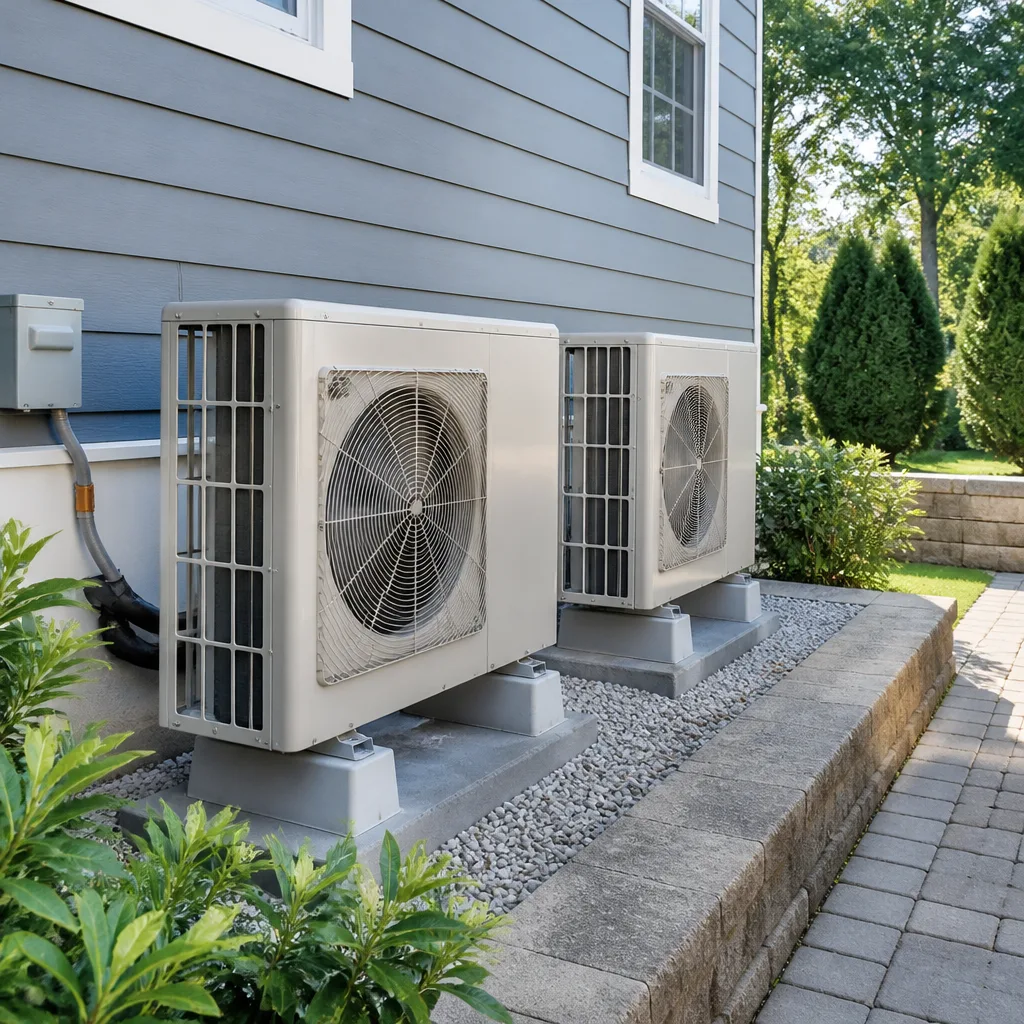 Heat pumps
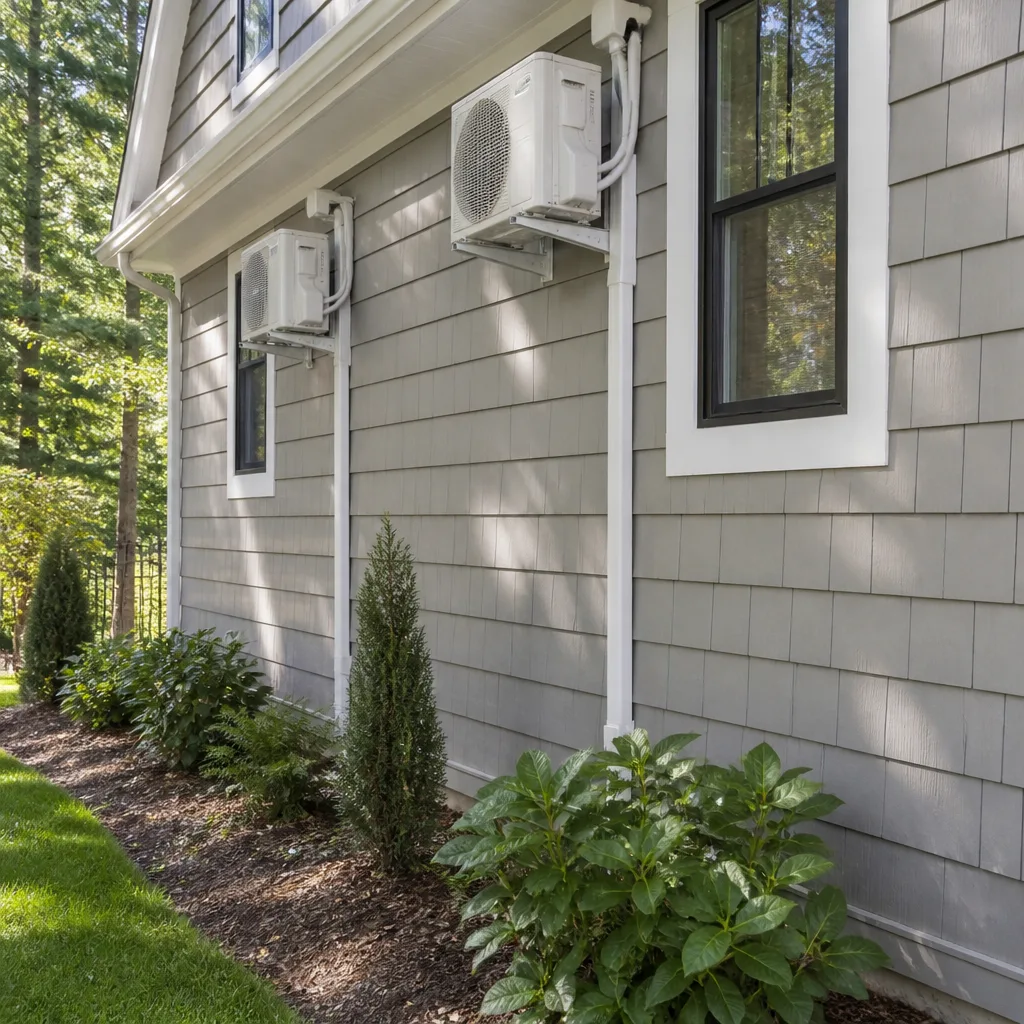 Ductless mini splits
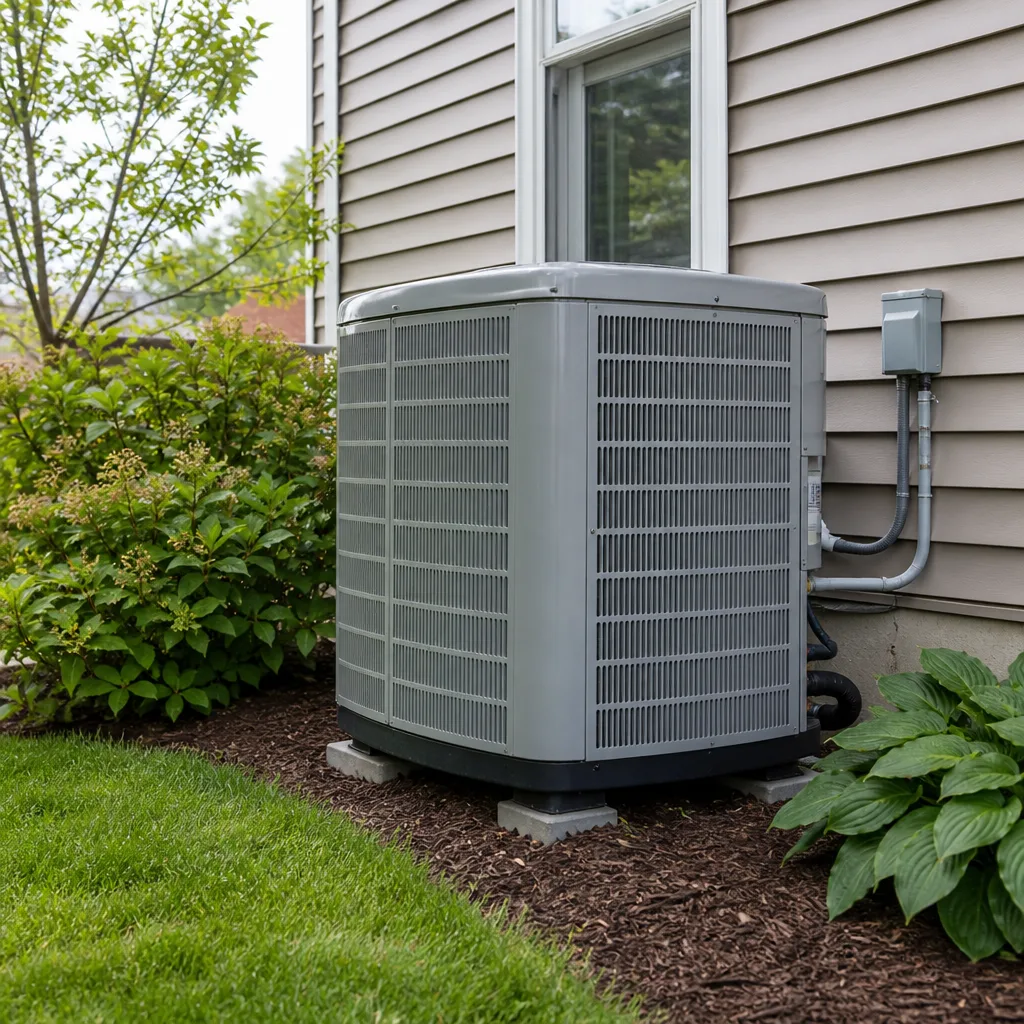 Carrier
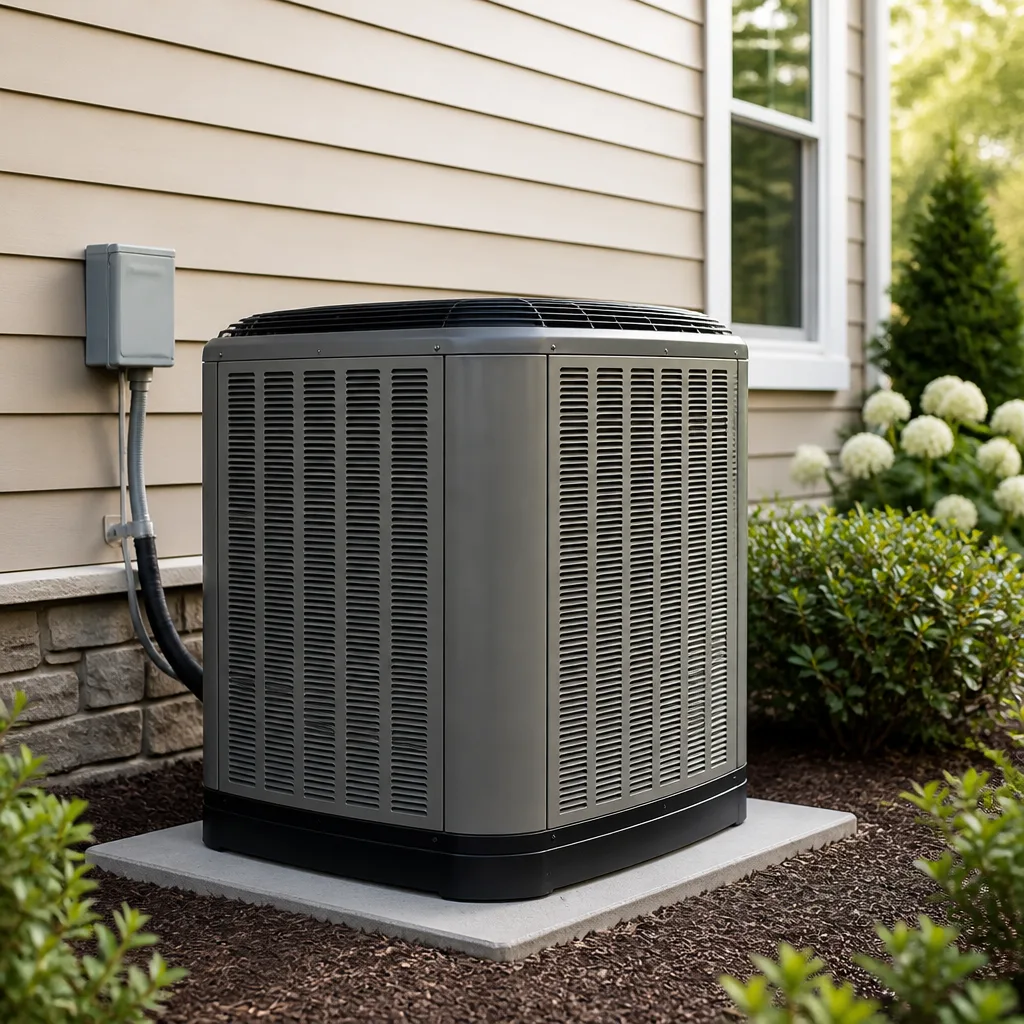 Trane
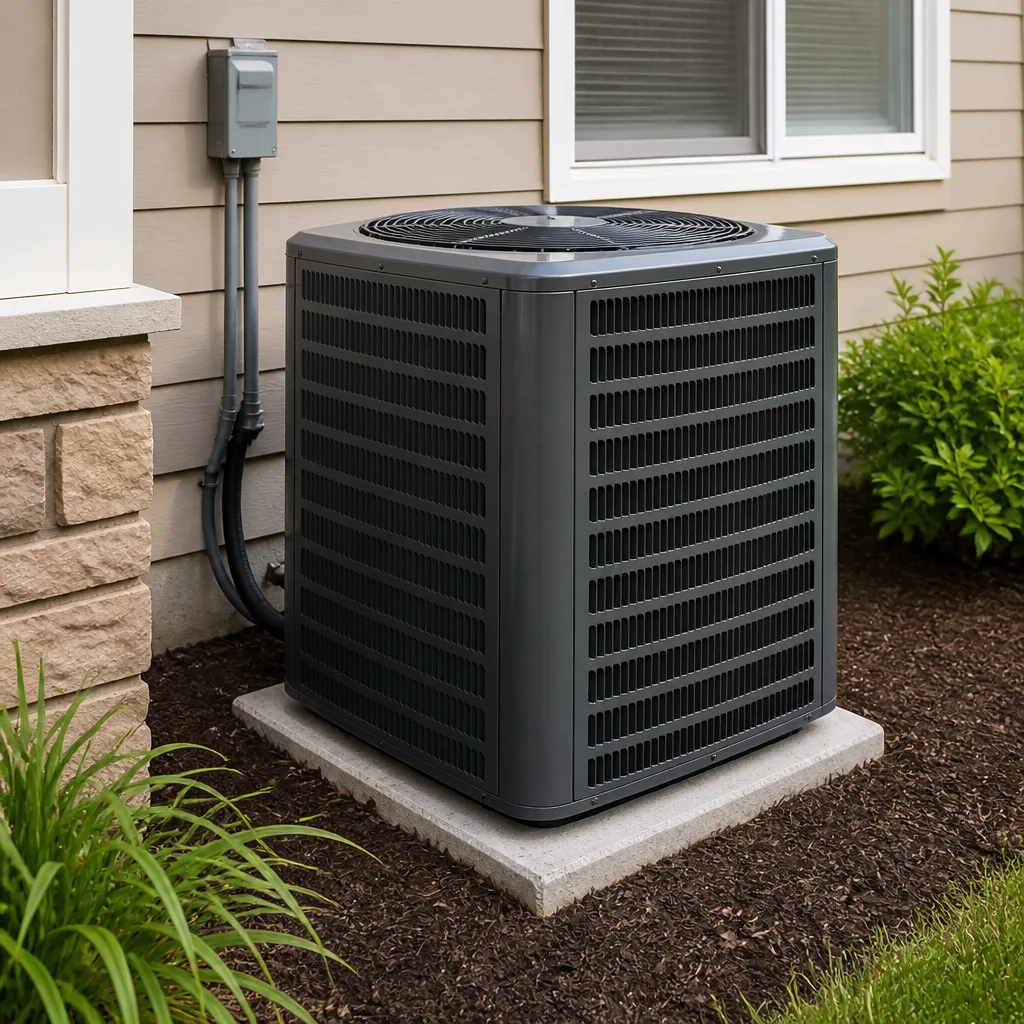 Goodman
Seasonal tune-up and full diagnostic on your Carrier, Trane, or Goodman system - readings shown to you before any repair is proposed
Diagnosis first, numbers second - you approve the repair price before a single part goes in.
Get your free estimateSeasonal HVAC Care for Coral Springs: Year-Round Homeowner’s Guide
Most national HVAC advice tells you to schedule an annual tune-up in early fall. In Coral Springs, that means servicing a system that just finished its hardest five months, not one that’s about to start them. Our cooling season runs long and our heating season barely shows up, which flips the maintenance calendar most homeowners inherit from colder parts of the country. This guide lays out the four stress periods your system actually faces in Coral Springs, what to check and when, and which tasks belong to you versus a technician.
Quick Answer
In Coral Springs, the highest-value AC tune-up happens in March and April, before the load ramp begins, not in October. Before hurricane season peaks, protect and secure your outdoor unit. Test heating operation in November or December, before the brief cold window. And use the dry February-April stretch for coil cleaning and duct inspection, when low humidity lets the work actually stay done.
Styles & brands we work with
- AC repair
- Furnace & heating
- Heat pumps
- Ductless mini splits
- Carrier
- Trane
- Goodman
Table of Contents
- Why Coral Springs Has Four HVAC Stress Periods, Not Four Seasons
- The March-April Pre-Season Window: Your Highest-Leverage Maintenance
- Hurricane Prep for HVAC Equipment: Before, During, and After Power Loss
- November-January Heating Mode: Testing Before the One Week It Matters
- The Dry-Season Advantage: Coil Cleaning and Duct Inspection
- Owner Tasks vs. Technician Tasks, Month by Month
- Multi-Brand Reality in Coral Springs Homes
- Building Your Coral Springs HVAC Calendar
Why Coral Springs Has Four HVAC Stress Periods, Not Four Seasons
Coral Springs doesn’t get a traditional four-season cycle. What it gets is a pattern of four distinct stress periods that each push your system differently. Once you see the pattern, the maintenance timing becomes obvious.
The four periods we work around in Coral Springs are:
- Pre-summer load ramp (March through May). Cooling demand climbs from spring to full summer. This is when weak capacitors, low refrigerant, and clogged filters fail first.
- Peak hurricane season (roughly June through November). Outdoor equipment is exposed to wind-driven debris, power surges, and long outages. The strain on the system after restoration is often worse than the storm itself.
- The brief heating window (late November through January). Short but real. Heat strips and heat pumps that sat unused for nine months get tested in the one week they matter most.
- Shoulder months that most homeowners waste (February through April). Lower humidity, cooler mornings, and less cooling demand. Perfect conditions for coil cleaning, duct inspection, and any work that benefits from dry air.
If you follow a Midwest maintenance calendar, you tune up in fall (after the load, not before) and ignore the dry months. Both decisions cost you. National advice assumes a system that idles in winter and runs hard in summer. Yours runs hard for most of the year and idles barely at all. The maintenance logic has to match that.
We’ve watched this play out across Coral Springs homes for long enough to know the timing matters more than the marketing. A tune-up in March catches failing parts before they strand you in July. The same tune-up in October catches them after the damage is done.
The March-April Pre-Season Window: Your Highest-Leverage Maintenance
March and April are the highest-leverage months for an AC tune-up in Coral Springs. You’re servicing a system that’s about to face five months of hard load, not one that just finished them. A problem found now is a problem fixed before the summer rush, before the parts queues get long, and before you’re sweating through a repair window in June.
A proper pre-season tune-up in Coral Springs should include:
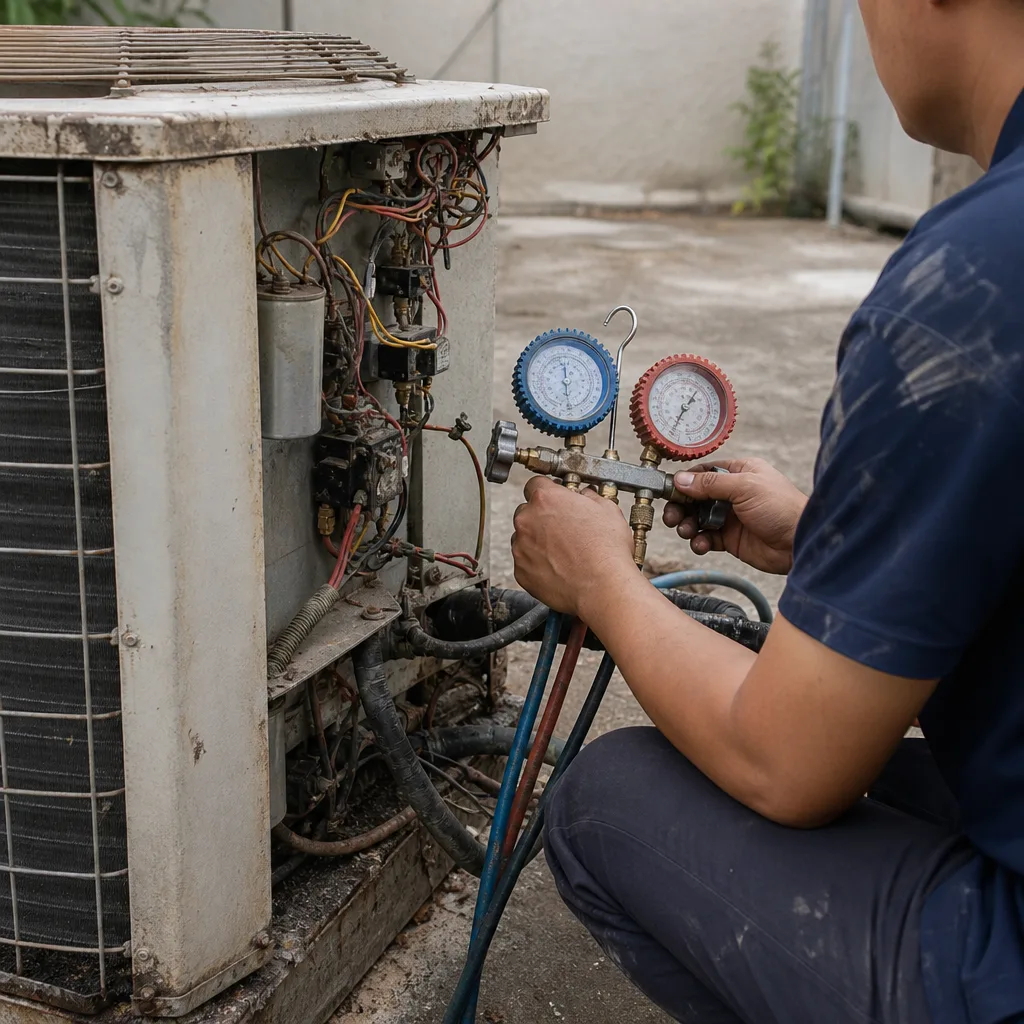
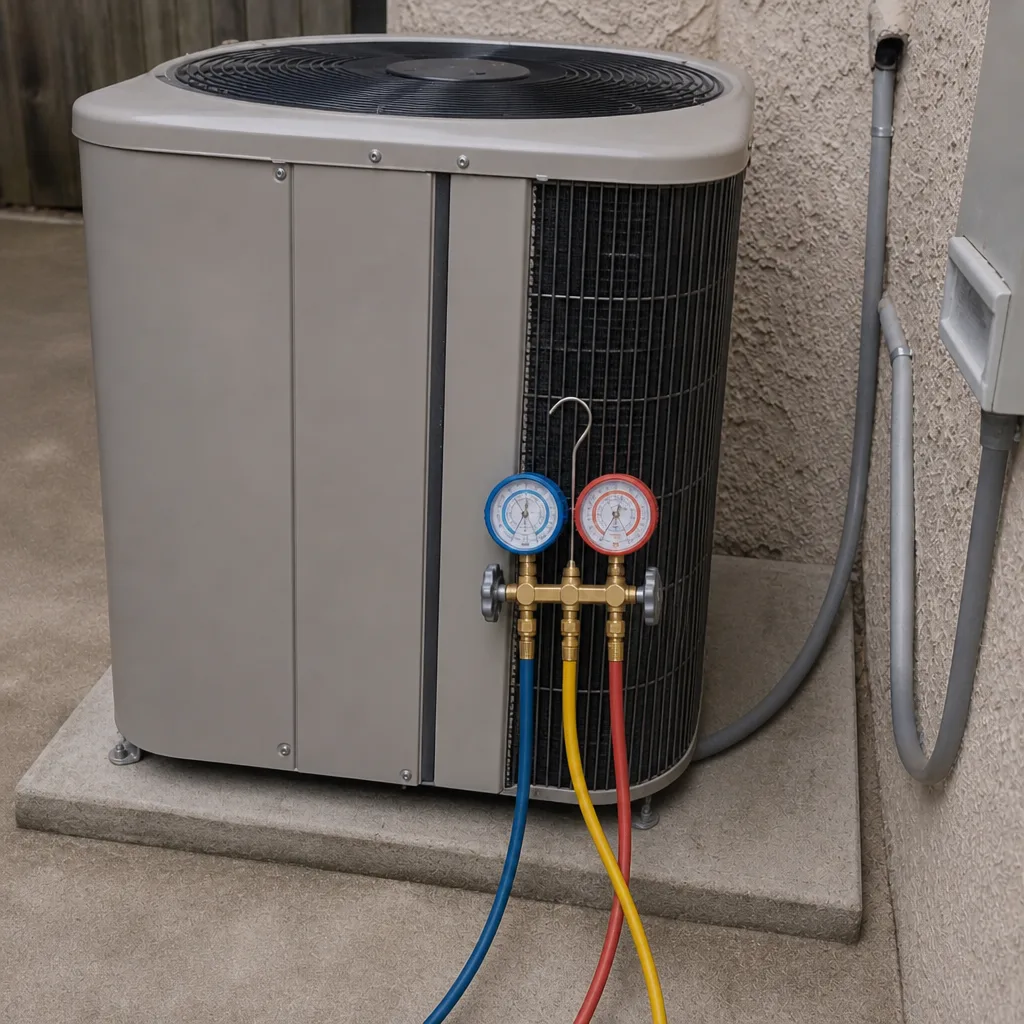
- Refrigerant charge check. Low charge is the most common cause of poor cooling, and it’s often a slow leak rather than an empty system. Verify the charge against the manufacturer’s spec, not a guess.
- Capacitor and contactor inspection. These are the parts that fail first when load climbs. A weak capacitor that runs fine in April will trip the system in July.
- Condenser coil cleaning. Outdoor coils accumulate pollen, dust, and yard debris through the spring. A dirty coil drives up amp draw and strains the compressor.
- Drain line clearing. A clogged condensate drain is the number-one cause of water damage in South Florida air handlers. Clear it before the summer humidity adds volume.
- Filter replacement. Fresh filter going into the load season. Cheap insurance.
- Thermostat calibration check. Make sure the setpoint matches reality before the system runs continuously.
- Airflow check. Register and return measurement to catch duct restrictions before they become a compressor problem.
What you should not do is wait until the first 95-degree week. By then every HVAC company in Broward County is booked, and a system that needed a $30 capacitor in April needs a compressor in August. The pre-season window is the one timing decision that pays for itself regardless of which brand you own.
If your equipment is aging and the pre-season check turns up a repair that costs most of a replacement, that’s the moment to think about AC installation rather than patching a system you’ll replace next season anyway.
Hurricane Prep for HVAC Equipment: Before, During, and After Power Loss
Hurricane prep for your HVAC equipment is about two things: keeping the outdoor unit from becoming a projectile, and not destroying the compressor when power comes back. Most storm damage to HVAC systems happens after the storm passes, when power restores to a system that wasn’t ready for it.
Before the storm
- Clear the area around the outdoor unit. Anything loose within a few feet (furniture, potted plants, garden tools, kid’s toys) becomes a projectile in wind. Move it inside or into the garage.
- Trim overhanging branches. Palm fronds and oak limbs are the most common debris that ends up inside a condenser.
- Secure the unit if it’s not anchored. Many Coral Springs outdoor units are set on pads without anchor straps. If yours isn’t strapped, that’s a real risk with hurricane-force wind. A technician can confirm and anchor it.
- Note the model and serial number. Photograph the data plate on the outdoor unit. You’ll need it if the unit is damaged and you have to file a claim.
- Set the thermostat to off before the storm hits. Don’t let the system try to run during outages and brownouts.
After the storm
The critical step: don’t turn the system on the moment power returns. Wait for stable power, then do this in order:
- Inspect the outdoor unit for visible damage, debris inside the fan grille, and standing water around the pad. If the fan won’t spin freely by hand, leave it off and call.
- Restore power at the thermostat and let the system run for a few minutes while you listen. Any grinding, screeching, or repeated tripping means shut it down.
- Check for water inside the air handler closet or attic pan. Overflow after an outage is common if the drain was already partly clogged.
Power restoration after a hurricane is the highest-corrosion event your system will ever see. Brownouts, surges, and rapid on-off cycling are hard on compressors and control boards. A brand-neutral diagnostic approach (like ours across York, Daikin, and Bryant systems) means a technician checks the whole picture, not just the part that failed most recently. If the outdoor unit needs service or the system is failing after storm damage, our furnace repair team handles the heating side of the same visit, so you’re not booking two companies.
November-January Heating Mode: Testing Before the One Week It Matters
Test your heating in November or December, not the night the cold front arrives. In Coral Springs, the heating season may be a single cold week in January – but when it comes, a heat pump or heat strip that hasn’t run since March is a coin flip. That’s the night nobody wants to discover the element is burned out.
Turn the thermostat to heat on a mild morning in November and let the system run for 15-20 minutes. Listen. Feel the registers. Watch what happens at the thermostat. Then you’ll know before the cold snap.
Common cold-snap failure modes in Coral Springs
- Failed heat strips. Electric heat strips in an air handler age quietly. The element corrodes or the sequencer fails, and the system blows lukewarm air when you ask for heat.
- Heat pump reversing valve stuck. A heat pump that won’t switch to heating mode will cool the house in December. Reversing valve failures are more common on systems that never ran in heat mode all year.
- Defrost control board fault. Heat pumps in South Florida rarely accumulate frost, so a faulty defrost board can sit silent for a full year and only surface when a cool, damp morning triggers the sequence.
- Thermostat mode confusion. A smart thermostat that was set to cool-only for nine months may not trigger heat on the first request. Confirm the mode, not just the setpoint.
- Igniter or flame sensor issues on the small number of Coral Springs homes with gas furnaces. These fail after long idle periods.
Repair or replace is a real question on heating equipment, too. If a heat pump has a failed compressor and the system is over a decade old, replacing it may be the honest answer. A technician who only does AC work will push you toward a window unit; one who does both sides of the system can give you the cost-benefit straight.
The Dry-Season Advantage: Coil Cleaning and Duct Inspection
February through April is the best window in Coral Springs for coil cleaning and duct inspection. Lower humidity means the work stays done – no condensation rebuilding on a freshly cleaned evaporator coil the same afternoon, and no duct sealing that fights moisture for a week.
Two jobs benefit most from this timing:
Evaporator coil cleaning
An indoor coil that sits in high humidity attracts biological growth, dust, and lint. Cleaning it in a humid month means you’re re-growing what you just cleaned within weeks. Cleaning it in February or March, then letting the system run dry for a few weeks before summer, gives you a coil that starts the load season clean. This is also the best time to check the coil for corrosion, bent fins, and refrigerant leak traces, since the tech isn’t fighting a wet cabinet.
Duct inspection and sealing
Duct leaks are a hidden cost in Coral Springs homes. Attic duct runs that leak cool air into a 140-degree attic lose a real percentage of what you paid for. Sealing in the dry months means the mastic cures properly and the insulation rebuild stays put. It’s also when duct cleaning (if needed) is most effective. In our experience, the majority of “AC isn’t cooling” calls on older Coral Springs homes that turn out to be duct issues get missed by companies that only look at the outdoor unit.
If your equipment is a Daikin or American Standard system that’s never had the indoor coil looked at, dry season is the moment. Coil cleaning plus duct sealing on those systems frequently recovers enough capacity that a replacement gets pushed back a season or two. That’s real money.
Owner Tasks vs. Technician Tasks, Month by Month
Homeowners can do a surprising amount of their own HVAC care safely. What they shouldn’t do is anything involving refrigerant, electrical components, gas, or climbing into an air handler cabinet. Here’s the break-out by month so you stop paying for things you can do yourself.
Owner tasks (safe for most homeowners)
- Every month: Replace or wash the filter. In Coral Springs, filters clog faster than the national average because the system runs more months per year. Check it, don’t assume.
- Every month: Visual check of the outdoor unit – clear debris from the top grille and sides, confirm the fan spins.
- March: Clear vegetation and stored items within a few feet of the outdoor unit.
- April: Test the thermostat through a full heat-to-cool cycle and confirm the setpoint holds.
- June: Re-check filter after the first full month of load season. This is when most filters fail.
- August: Check the condensate drain pan and the drain line for standing water. Flush the line with water if accessible.
- November: Turn the thermostat to heat on a mild morning, let it run 15-20 minutes, and note whether the air feels warm at the registers.
- December: Photograph the outdoor unit’s data plate and file it with your homeowner documents – you’ll want it for insurance if needed.
Technician tasks (don’t DIY these)
- Refrigerant charge verification and leak detection. Requires gauges, a recovery machine, and EPA certification.
- Capacitor, contactor, and control board testing. Live electrical testing in a panel or air handler is a serious shock hazard for anyone without proper training and equipment.
- Compressor diagnostics. A compressor failure that looks like a capacitor or charge issue requires clamp-meter readings and a trained eye.
- Heat strip and sequencer testing. These components carry high current and should be tested with the equipment properly isolated.
- Evaporator coil cleaning. Requires opening the air handler, chemical cleaning, and proper containment.
- Duct inspection in attic conditions. Steep-roof and attic access is a real fall and heat risk. Let a technician handle it.
- Anchoring and hurricane-strapping outdoor units. Involves pad work and structural attachment points.
Multi-Brand Reality in Coral Springs Homes
Coral Springs has one of the most brand-diverse HVAC housing stocks in Broward County. Walk into ten homes and you’ll find a dozen different nameplates, because installers over the years have used whatever was on the truck. That reality matters for maintenance timing: the parts availability, the failure patterns, and the likely repair cost all depend on what’s installed.
Our technicians are trained on nine of the industry’s most widely installed brands, including Carrier, Trane, Lennox, Goodman, Rheem, York, Daikin, Bryant, and American Standard. That means when we schedule a March tune-up, we’re not learning your system on your dime. We know the York heat pump failure pattern before we open the panel. We know which Bryant air handlers in Coral Springs tend to rust out the condensate pan first. Nine major brands, zero brand bias.
That neutrality goes beyond maintenance. When a tune-up turns up a repair that’s borderline against replacement, we run the cost-benefit honestly for your system, not for whichever brand pays a manufacturer rebate that month. Repair or replace, we’ll tell you which one actually makes sense. And because we handle both the cooling and heating side under one company name, one call covers your Clover AC Repair service visit for furnace and AC.
Our technicians have up to 13 years of experience. We’re state-licensed and insured, and we can work with your insurer if a storm-related failure needs a claim.
Building Your Coral Springs HVAC Calendar
Here’s the practical version of everything above, laid out as a working calendar you can actually follow.
- March. Schedule the pre-season AC tune-up. This is the highest-value timing of the whole year. Includes refrigerant check, capacitor inspection, coil cleaning, drain clearing, filter.
- April. Dry-season coil and duct inspection while humidity is still low. Book it alongside the March tune-up if possible to save a dispatch.
- May. Confirm outdoor unit is clear and case sealed. Owner check.
- June. Storm-season prep: anchor check, branch trimming, filter change, photo of data plate.
- July-September. Watch for any change in cooling performance. A system that’s working harder than it did in April needs a diagnostic, not a wait-and-see.
- October. Post-storm season inspection if a storm passed through. Otherwise, this is the month to skip – it’s not a tune-up window, it’s a recovery window.
- November. Heating mode test. Schedule a heating check if the heat pump hasn’t run since March.
- December-February. Off-peak scheduling is easiest. Get coil and duct work done now if the March-April slots are already booked.
If you’re following the Coral Springs calendar and end up needing to shift a furnace repair or furnace replacement into the mix, that’s the point of full-scope coverage: we handle it without a handoff to a second contractor.
Common Mistakes to Avoid
- Following a national tune-up calendar. The September-October slot most advice recommends is the wrong month in Coral Springs. You’re servicing after the load, not before it.
- Running the system the second power comes back on. After an outage, brownouts and rapid cycling can damage a compressor that would have been fine if the system had waited a few hours. Confirm stable power first.
- Skipping the heating test. A heat pump that hasn’t run in heat mode for nine months can fail on the one cold night of the year. Test in November.
- Ignoring the drain line until it overflows. Condensate drain clogs are the most common water-damage cause on Coral Springs air handlers and the easiest thing to prevent. Clear it before load season and check it once mid-season.
- Cleaning coils in July instead of February. A coil cleaned in high humidity rebuilds growth quickly. Do the work when it will actually stay done.
- Not strapping the outdoor unit. Many Coral Springs installations sit on a pad without anchors. That’s a wind-damage risk every June.
- Booking tune-ups that include tasks you can do yourself. Filter changes, visual checks, and thermostat tests belong on your monthly list, not a service invoice. Save the technician visit for the work that requires training and tools.
See the difference
 Before
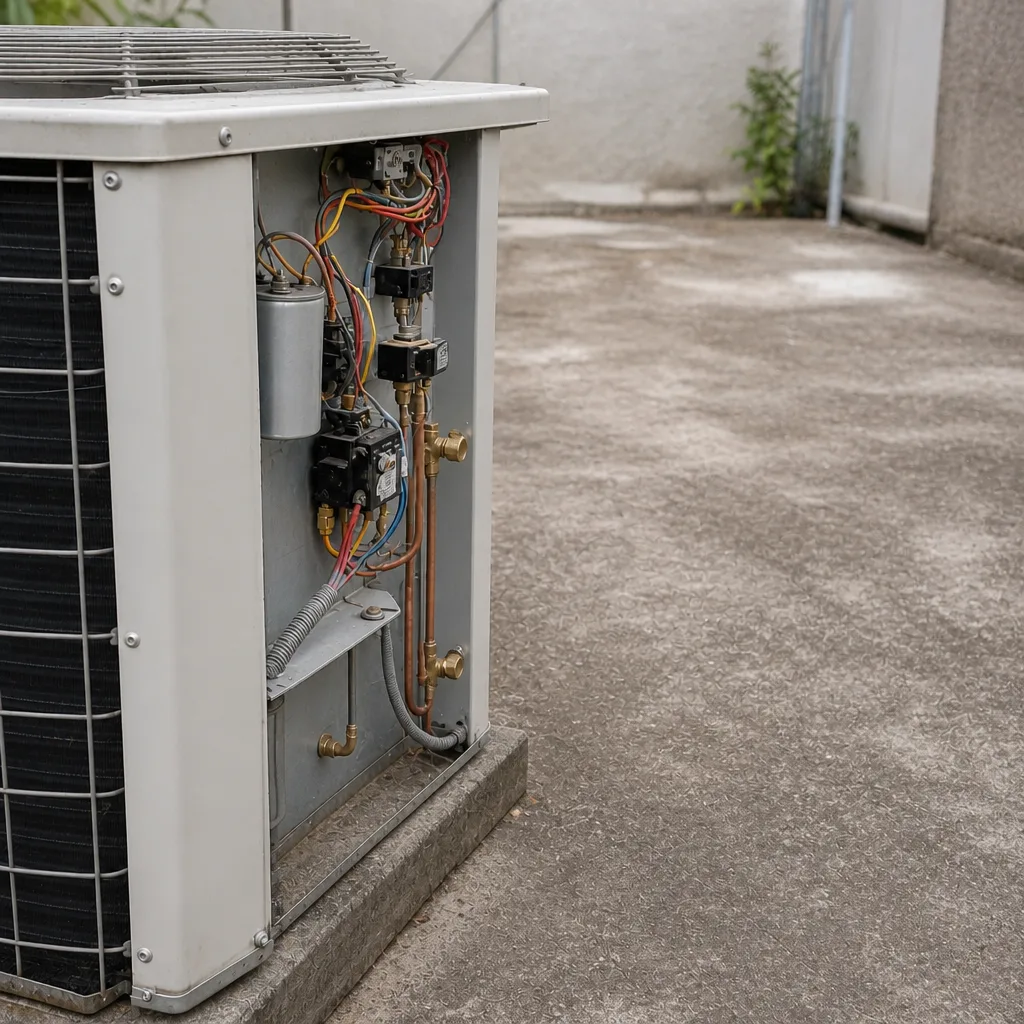 After
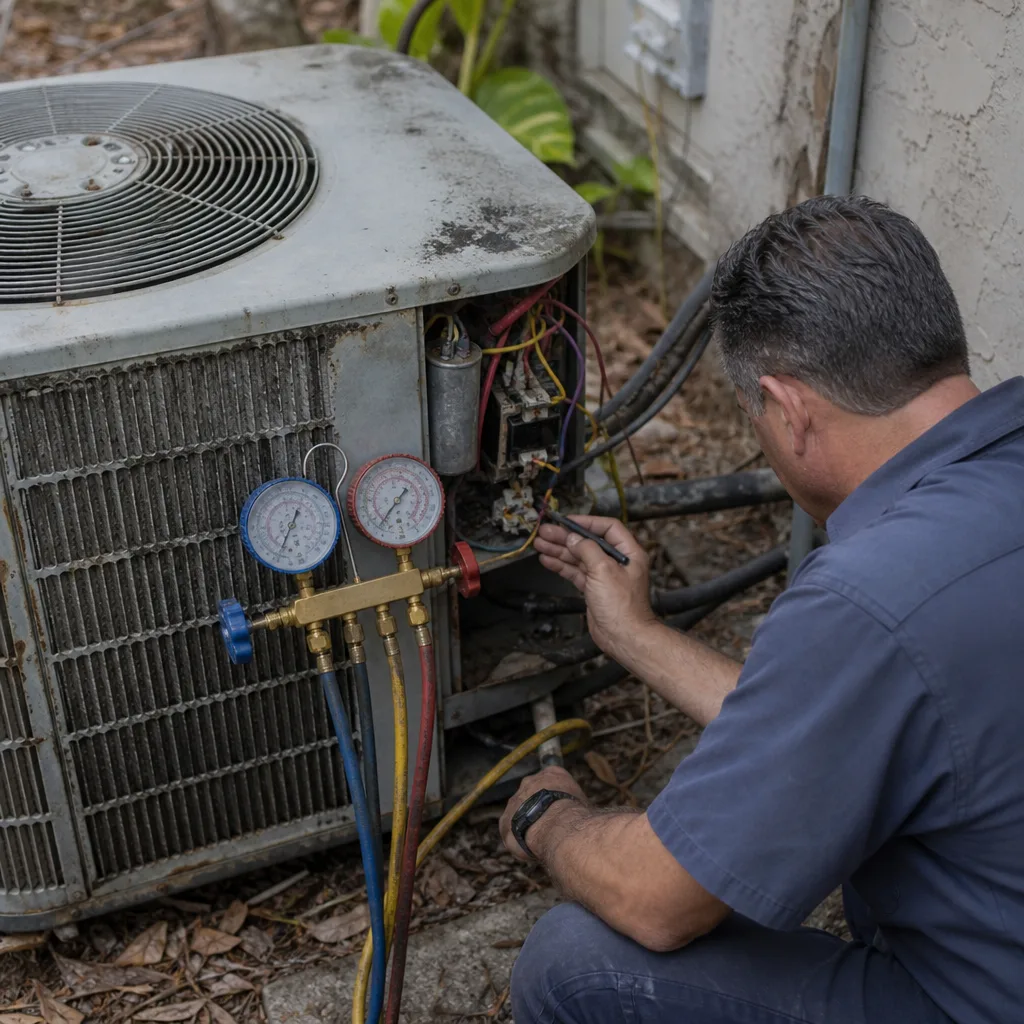 Before
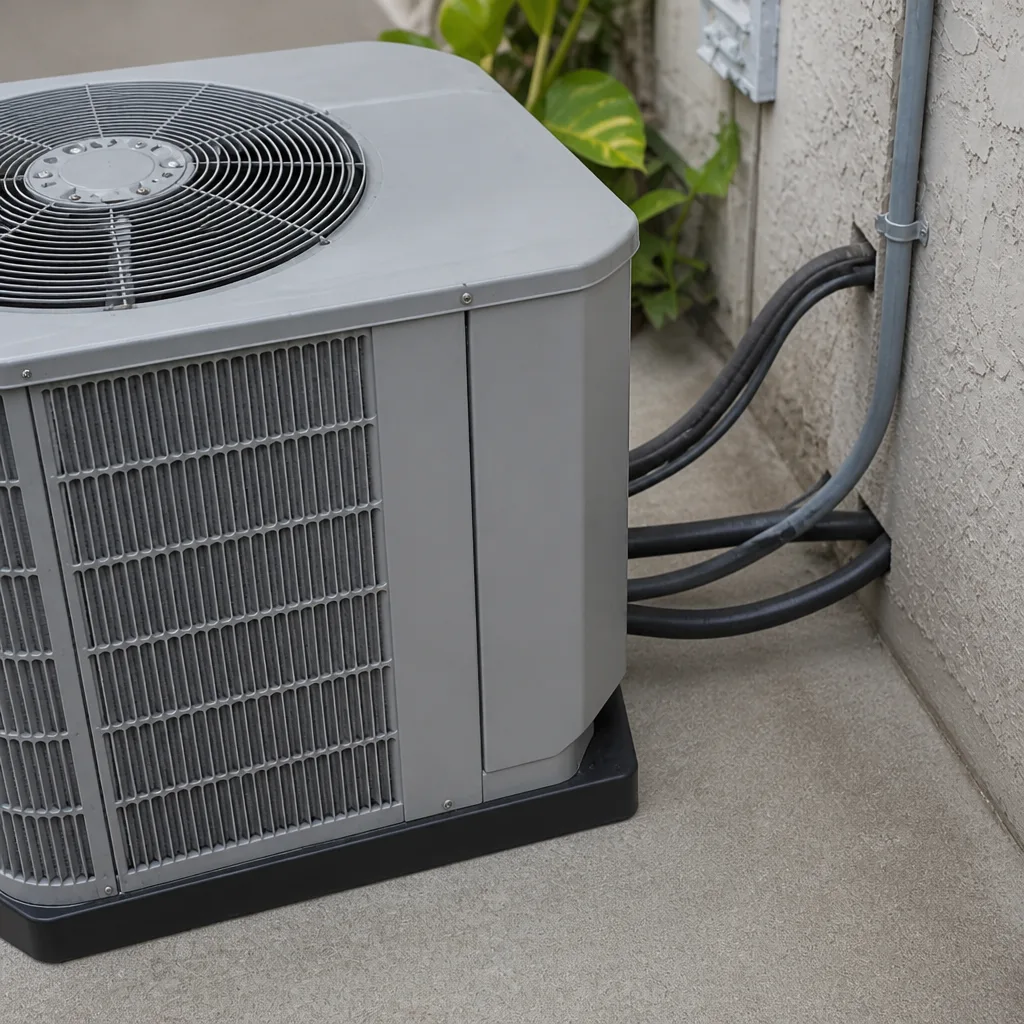 After
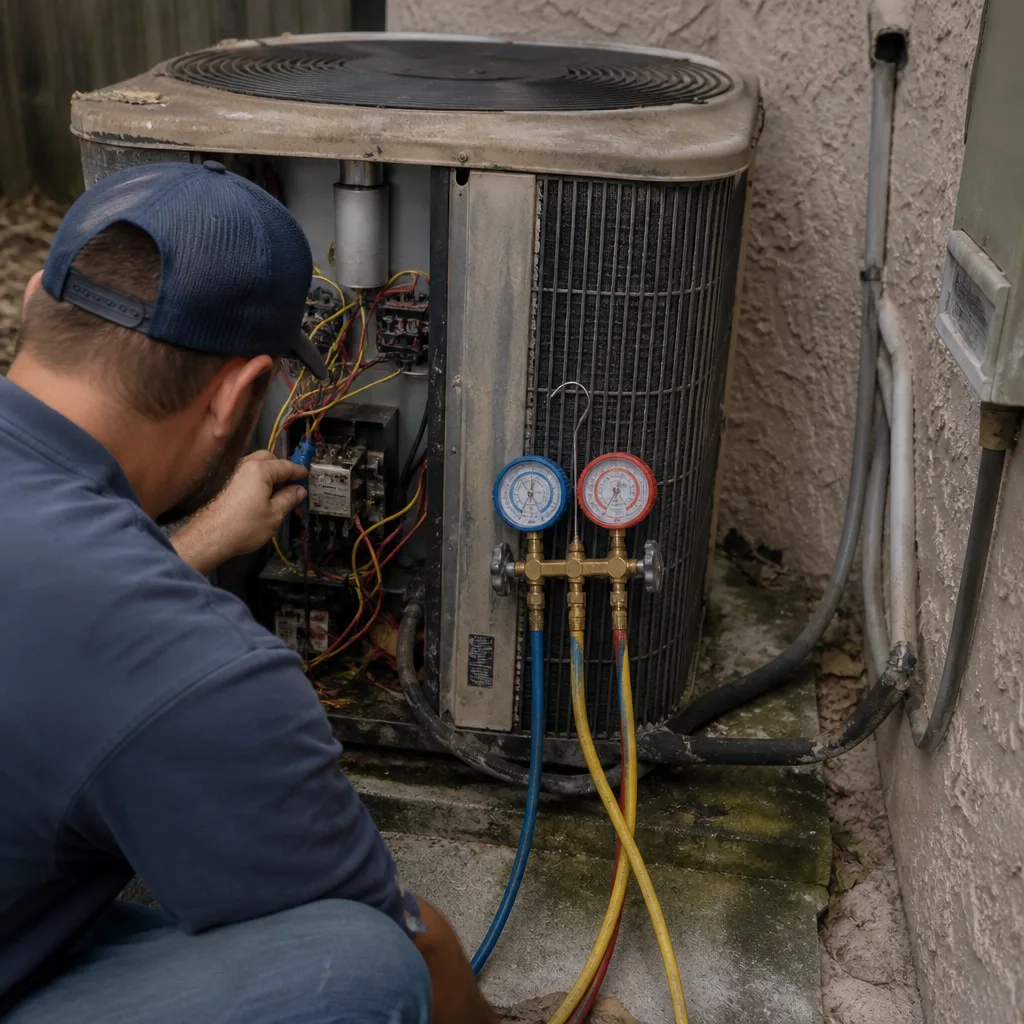 Before
 After
When to Call a Professional
Call a professional when the system trips a breaker, blows warm air with the thermostat set to cool, shows water in the drain pan or air handler closet, or makes grinding, screeching, or repeated short-cycling sounds. Call before power restoration after a storm if the outdoor unit shows visible damage, standing water, or a fan that won’t spin freely. Call if the heat pump won’t switch to heat mode in a cold snap, or if your heating system hasn’t run since last spring and you want it verified before you rely on it. Call if the outdoor unit isn’t anchored ahead of hurricane season.
Clover AC Repair offers free estimates in Coral Springs – call (833) 501-2993.
Frequently Asked Questions
March and April, before the summer load ramp begins. That timing lets a technician catch failing parts and low refrigerant before the system is under demand, not after. October tune-ups are common but service the system after its hardest months, so they catch less. Call (833) 501-2993 for scheduling – estimates are free.
No. Do not cover it, because a cover becomes a sail in high wind and can damage the unit worse than the debris. Secure or remove loose items around it, trim overhanging branches, confirm it’s anchored to the pad, and set the thermostat to off before the storm. Call us for an anchor check before the season starts.
Because a heat pump or heat strip that sat unused for nine months can fail on the one cold week it’s needed. Testing in November lets a technician find a failed sequencer, a stuck reversing valve, or a bad defrost board before the cold front arrives. Call (833) 501-2993 if your heat has never been checked.
Monthly through the load season, which runs longer here than in most of the country. A filter that would last three months in Ohio clogs in one month of South Florida operation. Check it at the start of every month and replace if it looks gray or matted. Call for an airflow check if your filter clogs faster than monthly.
Yes, more so than in summer. Cleaning a coil during low-humidity months means it stays clean through the load season instead of rebuilding growth in a week. This is also the best window for duct inspection and sealing, since the work cures properly. Call (833) 501-2993 to schedule coil and duct work before March.
Nine of the most widely installed brands, including Carrier, Trane, Lennox, Goodman, Rheem, York, Daikin, Bryant, and American Standard. We service your system, whatever name is on it, on both the cooling and heating side. Call (833) 501-2993 for a free estimate on any brand.
The Bottom Line
Coral Springs doesn’t run on four seasons; it runs on four HVAC stress periods, and the maintenance calendar has to match them. The March-April window is the highest-leverage tune-up timing, not October. Storm-season prep belongs in June, not after landfall. Heating gets tested in November, not the night the cold front arrives. And the dry February-April months are when coil cleaning and duct work actually stay done. Do the owner tasks yourself each month, save your service visits for the work that requires training. And when the system needs more than maintenance, one call covers both the AC and the furnace. One call for your furnace and your AC. Clover covers it.
Call (833) 501-2993 for a free estimate. We answer 24/7. Fast dispatch from 7am to 7pm, Sunday through Friday.
Written by the team at Clover AC Repair.